From Osaka’s energy to Nara’s temples and the quiet coast of Ise
- Japan’s southern regions reveal a quieter kind of contrast.
- Modern cities, ancient capitals, and coastal landscapes sit close together, yet each feels entirely distinct in atmosphere and rhythm.
- This journey is defined less by distance and more by subtle shifts — from motion to stillness, from intensity to silence.
Osaka begins the journey with immediate energy.
A city shaped by movement, expression, and appetite, Osaka is vibrant from the moment you arrive.
Osaka Castle stands as a historic anchor within a modern skyline, while Kuromon Market brings daily life into sharp focus through sound, colour, and constant activity.
In Dotonbori, neon lights reflect across the canal as crowds move through narrow streets lined with restaurants and signs that glow deep into the night.
The city does not soften its edges — it thrives in them. Everything feels immediate, alive, and unfiltered.
A stay at Swissôtel Nankai Osaka places you directly above this rhythm, connected to Namba Station and the pulse of the city below.
From Osaka, the pace shifts quietly in Nara.
Once Japan’s first permanent capital, Nara feels open and unhurried. History here is not enclosed — it moves through parks, pathways, and temple grounds that remain integrated with daily life.
At Tōdai-ji Temple, the Great Buddha sits within vast wooden halls that seem to hold their breath. Outside, Nara Park stretches into wide green space where deer move freely between visitors and shrines.
Deeper in the forest, Kasuga Taisha Shrine is reached along stone paths lined with lanterns, where light and shadow shift gently beneath the trees.
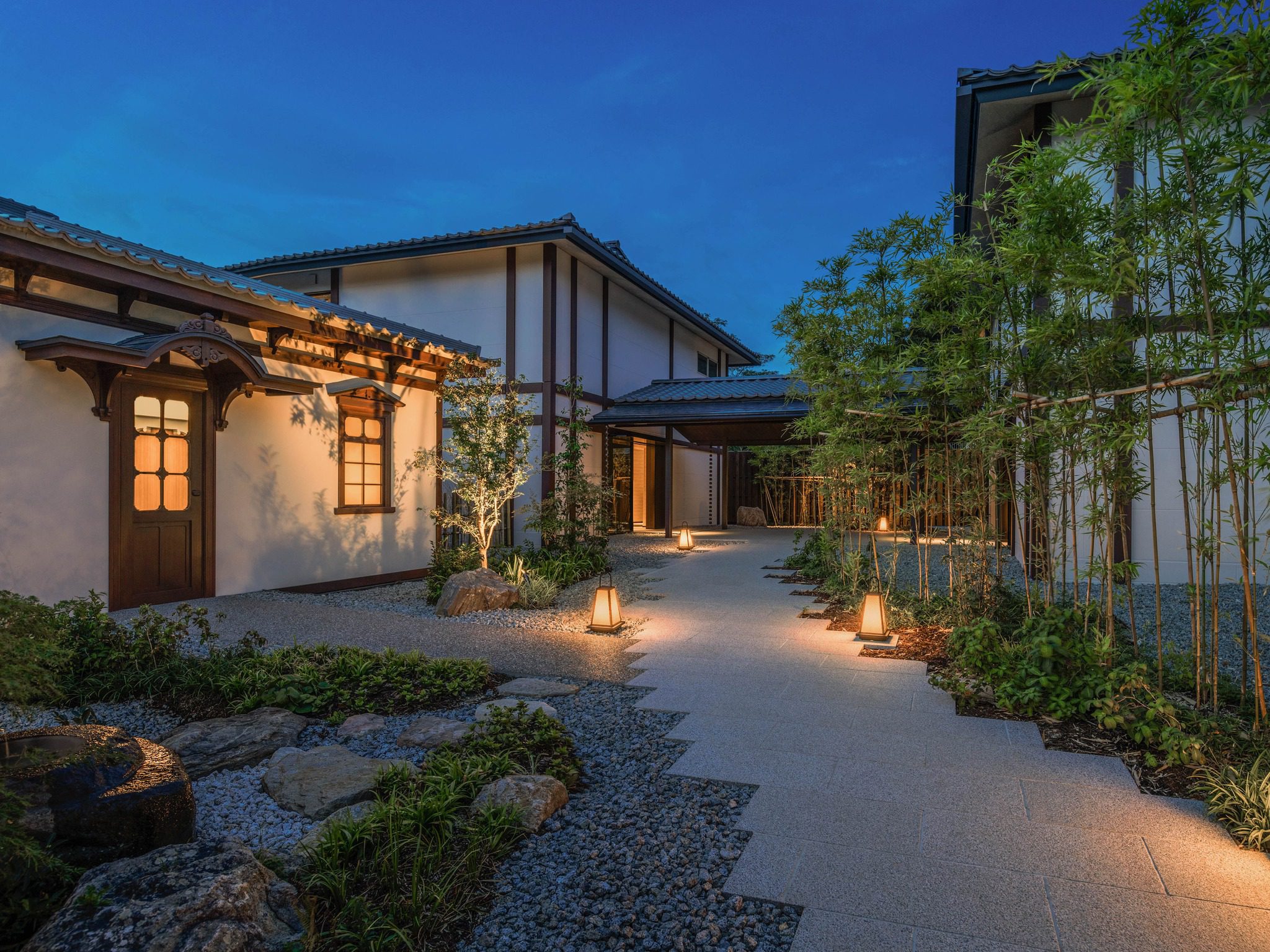
A stay at Nara Hotel extends this atmosphere — quiet, traditional, and closely tied to the city’s enduring character.
Beyond Nara, the landscape opens toward the sea and coast.
The Ise Peninsula is shaped by water, forest, and small coastal settlements. Life here follows natural cycles rather than urban schedules, with fishing villages and quiet roads tracing the contours of land and sea.
Shifting coastlines alternate between rocky edges and sheltered bays, while inland hills create a sense of distance from everything modern.
At the centre of the region lies Ise Grand Shrine.
One of Japan’s most significant spiritual sites, it is defined not by grandeur but by restraint. It is experienced through movement — walking forest paths, crossing wooden bridges, and passing through natural space shaped by centuries of ritual.
Everything here is intentional and simple. Silence is not absence — it is part of the structure itself.
Overlooking Ago Bay, Amanemu reflects the same calm.
Onsen baths open toward the landscape. Architecture blends into surrounding hills. Light shifts slowly across water and stone. The experience is unhurried, shaped by space, warmth, and stillness.
Here, time does not feel compressed. It expands quietly into the surrounding nature.
Beyond sanctuaries and resorts, the coast continues.
Fishing villages maintain steady, unremarkable rhythms. Roads follow the land rather than reshape it. The sea remains a constant presence — distant, familiar, and unchanging.
Nothing here feels hurried. The pace is set by geography, weather, and tradition.
This journey is ultimately defined by contrast.
Osaka is movement. Nara is stillness. Ise is silence. Each place shifts the tone of the journey, revealing a different register of Japan’s southern identity.
Together, they form a continuous transition — from urban intensity to cultural depth, and finally into coastal calm.
The Route at a Glance
This 8-night journey typically follows a simple southward arc:
- Osaka — 2 nights
- Nara — 2 nights
- Ise Peninsula — 4 nights