From ancient capitals and temple mountains to coastal islands, rural valleys, and Tokyo’s modern skyline
- Japan reveals itself through depth, silence, and sacred geography.
- Ancient capitals, temple mountains, rural landscapes, and remote islands form a journey shaped by spirituality and cultural continuity.
- This itinerary is defined by stillness and contrast — between pilgrimage routes, coastal isolation, and modern city life.
It begins in Nara.
Japan’s first great capital sets a quiet tone for the journey. Temples rise from wooded surroundings, and history is woven into everyday life rather than separated from it.
At Tōdai-ji Temple, the Great Buddha sits within vast wooden halls, while Nara Park opens into wide green space where deer move freely between shrines and pathways.
A stay at Nara Hotel places the experience close to the historic centre, where Meiji-era elegance meets the stillness of Japan’s ancient capital.
From Nara, the journey moves into deeper history.
Asuka is often described as the birthplace of Japanese civilisation. Rice fields, quiet roads, and ancient tombs shape a landscape where time feels layered rather than linear.
Cycling through the countryside reveals stone burial mounds, small shrines, and open fields that have changed very little for centuries.
A stay at a refined countryside ryokan such as Asuka no Yado or a boutique rural inn brings a slower rhythm, shaped by seasonal meals and silence.
From Asuka, the journey rises into the mountains.
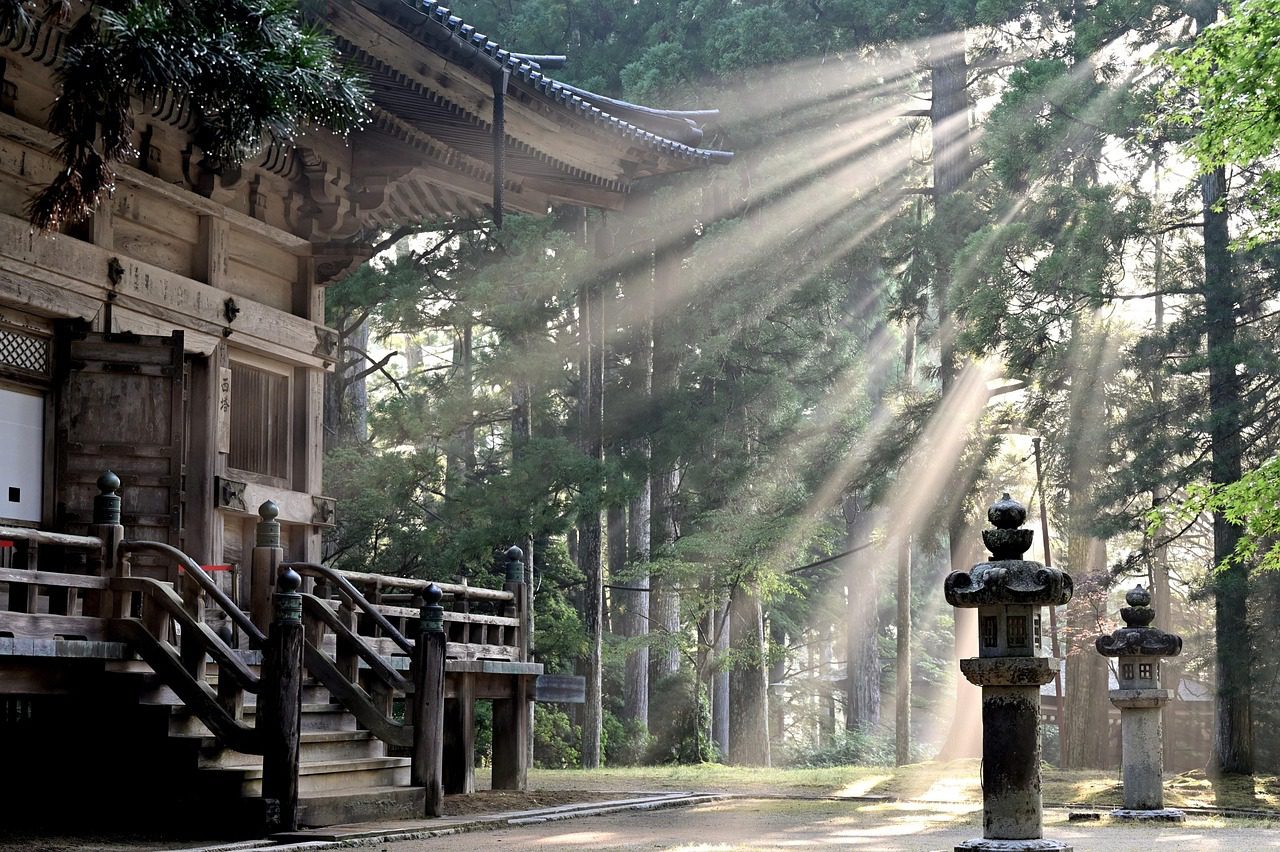
Mount Koya (Koyasan) is one of Japan’s most important spiritual centres, hidden among cedar forests and mountain mist.
Here, accommodation becomes part of the experience. A stay in a temple lodging such as Eko-in Temple or Fukuchi-in offers shojin ryori cuisine and monastic surroundings.
A monk-guided walk through Okunoin Cemetery reveals lantern-lit paths and centuries of Buddhist heritage.
From the mountains, the journey moves toward the coast.
The Mie region blends sacred pilgrimage sites with coastal culture. At its heart lies Ise Grand Shrine, one of Japan’s most important spiritual destinations.
A stay at Amanemu or Shima Kanko Hotel The Bay Suites overlooks Ago Bay, where forested hills meet calm ocean waters.
Nearby, pearl cultivation islands and historic post towns reflect craftsmanship, tradition, and coastal life.
From Mie, the landscape shifts northward.
Niigata opens into wide rice fields, mountain valleys, and onsen towns shaped by snow, agriculture, and seasonal rhythm.
A stay at a traditional ryokan such as Aryokan Takahan or a local mountain inn places you in the centre of hot spring culture and rural stillness.
Sake breweries and terraced landscapes reflect the region’s deep connection between land and production.
From Niigata, the journey reaches the sea.
Sado Island sits off the coast, shaped by isolation, fishing villages, and rugged coastline.
A stay at a seaside ryokan such as Osado Onsen Hotel offers ocean views, local seafood, and a slower rhythm of island life.
The journey then returns toward Tokyo.
After islands, mountains, and rural silence, Tokyo feels expansive and dynamic — a return to scale and movement.
A stay at Park Hotel Tokyo or The Prince Gallery Tokyo Kioicho offers skyline views and access to both modern districts and traditional neighbourhoods.
In the end, this journey is defined by depth.
Not speed. Not distance.
From sacred mountains to remote islands, ancient capitals to modern cities, Japan reveals itself as a layered landscape of spiritual and cultural continuity.
To travel this route is to move through silence, history, and nature — and see how accommodation itself becomes part of the story.
The Route at a Glance
- Nara — 2 nights (Nara Hotel)
- Asuka — 3 nights (countryside ryokan)
- Mount Koya — 2 nights (Eko-in / temple stay)
- Mie — 3 nights (Amanemu / Shima Kanko Hotel)
- Niigata — 3 nights (onsen ryokan)
- Sado Island — 1 night (Osado Onsen Hotel)
- Tokyo — 3 nights (Park Hotel Tokyo / The Prince Gallery)