From Tokyo’s neon skyline to alpine silence, samurai towns, and sacred temple cities
- Japan reveals itself in layers.
- Futuristic cities dissolve into preserved Edo streets. Alpine valleys open into quiet onsen towns. Ancient temples sit in the shadow of modern skylines.
- To travel through Japan is not simply to move between places — it is to move between different versions of time.
It begins in Tokyo.
A city that rarely softens its edges, Tokyo is defined by motion. Glass towers rise above rail lines, and entire districts pulse with constant rhythm. Yet beneath the surface, it is a city of quiet contradictions.
In Asakusa, temple bells break through the noise of traffic. In Shibuya, movement becomes choreography. Around the Imperial Palace, the city briefly slows, as if gathering itself.
Then there are places where Tokyo disappears entirely — into forested silence at Meiji Shrine, where gravel paths and wooden gates replace concrete and glass.
Beyond the city, the landscape shifts quickly. In Hakone, steam rises from volcanic ground, and Mount Fuji appears in fragments between shifting cloud and forested ridges. It feels like an entirely different country.
In Tokyo, the journey begins at height and speed — often from the calm of Park Hotel Tokyo, where the skyline becomes part of the room itself and the city is seen rather than felt.
From Tokyo, the route bends west toward Nagoya, though the city itself is not the destination.
What matters lies beyond it — the Nakasendo Trail, once used to connect Edo and Kyoto through mountain passes. Even a short walk between Magome and Tsumago feels like stepping outside of time.
Wooden houses line stone paths. Forest closes in softly from both sides. The modern world fades until only footfall and wind remain.
In the Japanese Alps, Takayama feels almost suspended.
Life moves more slowly here. The air is colder, clearer. Wooden merchant houses remain intact, and morning markets spill into narrow streets as they have for generations.
Evenings belong to stillness. Hot spring baths rise from natural ground heat, and meals unfold in precise seasonal rhythm.
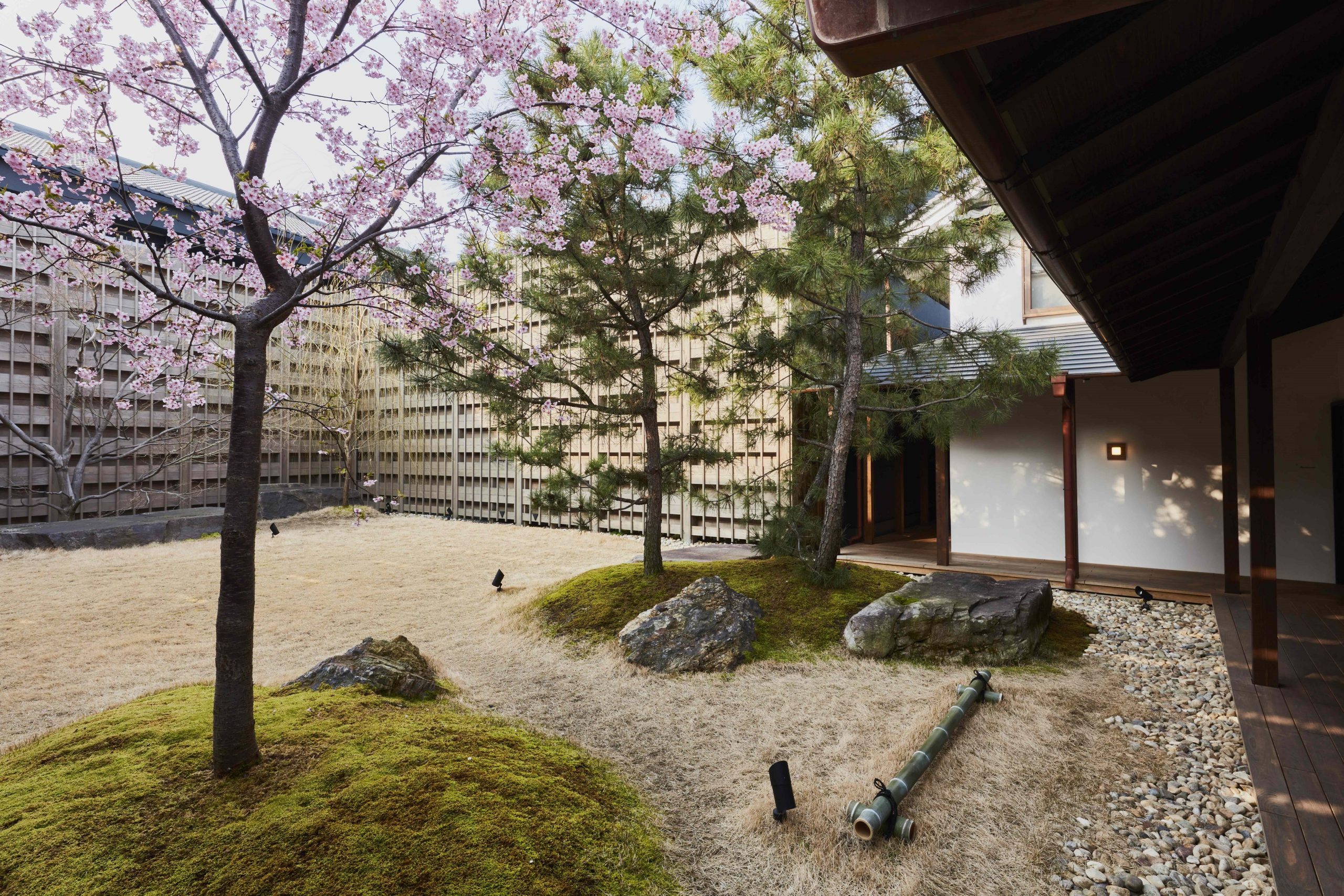
Here, the stay becomes part of the landscape itself at Hoshokaku Ryokan — where onsen water, tatami floors, and mountain silence replace the language of modern hotels.
Further north, the mountains soften into cultural memory.
Kanazawa is often described as elegant, but its beauty is not decorative — it is preserved. Samurai districts still carry their original layout. Geisha quarters remain quietly atmospheric. And Kenroku-en Garden shifts with the seasons, from structured greenery to snow-laden branches.
Not far away, Shirakawago appears like a remnant of another century — thatched roofs set against deep mountain silence, unchanged by time.
A more contemporary rhythm returns in Kanazawa itself at ANA Crowne Plaza Kanazawa, where the city’s historic districts remain within walking distance but the pace belongs firmly to the present.
The journey then turns toward water and memory.
Hiroshima carries a weight that is quiet rather than heavy. Peace Memorial Park sits open at its centre, not as a monument of spectacle but of reflection. The city around it continues forward, carefully, without erasing what came before.
Just offshore, Miyajima Island feels almost unreal in contrast. Forested slopes rise directly from the sea, and at high tide, the great torii gate appears to float on water.
The stay at Hotel Granvia Hiroshima places you close to both worlds — the reflective stillness of the city and the quiet rhythm of the coast.
Kyoto brings the journey into its final form.
If Tokyo is motion, Kyoto is memory.
The city does not reveal itself quickly. It unfolds through repetition — temple after temple, garden after garden, each one slightly different in tone but part of the same cultural language.
Kinkaku-ji reflects gold across still water. Kiyomizu-dera opens toward forested hills. Gion preserves narrow lanes where older rhythms of life still linger.
A short journey outward leads to Nara, where deer move freely through temple grounds and the scale of history feels almost effortless in its presence.
In the heart of Kyoto, Hotel Granvia Kyoto becomes a quiet anchor — directly connected to the station, yet only moments away from the city’s oldest streets and temple paths.
In the end, this is not a route defined by distance.
It is defined by contrast.
Between speed and stillness. Between glass and wood. Between cities that reinvent themselves daily and towns that have barely changed in centuries.
Japan does not offer a single identity — it offers many, layered like sediment over time. To travel through it is to move gently between them, and slowly begin to see how they belong together.
The Route at a Glance
For reference, this journey unfolds as a 14-night route across Japan’s main regions:
- Tokyo — 3 nights
- Nagoya (gateway to the Nakasendo Trail) — 2 nights
- Takayama (Japanese Alps) — 2 nights
- Kanazawa — 2 nights
- Hiroshima (with Miyajima) — 2 nights
- Kyoto — 3 nights