
THE JAPAN JOURNAL · MOUNTAIN RETREATS
Just beyond the energy of Tokyo lies a landscape of steaming hot springs, forested mountains and quiet lakeside shrines. Hakone is a place to slow down, breathe deeply and discover a more restorative side of Japan — where nature, culture and traditional hospitality come together.
Part of the Fuji-Hakone-Izu National Park, Hakone has long attracted travellers seeking mountain scenery, hot spring bathing and a welcome change of pace. Its landscapes range from the calm waters of Lake Ashi to the dramatic geothermal terrain of Ōwakudani.
Yet Hakone is more than a collection of scenic viewpoints. Traditional inns, carefully prepared seasonal meals, forest paths, museums and historic sites give the region a distinctive character. A memorable visit comes from combining its best-known sights with time to enjoy the atmosphere between them.
Whether you visit as a day trip from Tokyo or stay overnight in a traditional ryokan, Hakone offers an appealing balance of discovery and relaxation.
Why Visit Hakone?
Hakone brings several sides of Japan together in one mountain region. You can travel across a volcanic landscape, walk among towering trees, visit a historic shrine and finish the day soaking in an onsen.
The variety is part of its appeal. Some experiences are dramatic and expansive; others are intimate and quietly traditional. The best itinerary makes room for both.
- Natural hot springs: Experience Japanese bathing culture in a public bath or traditional inn.
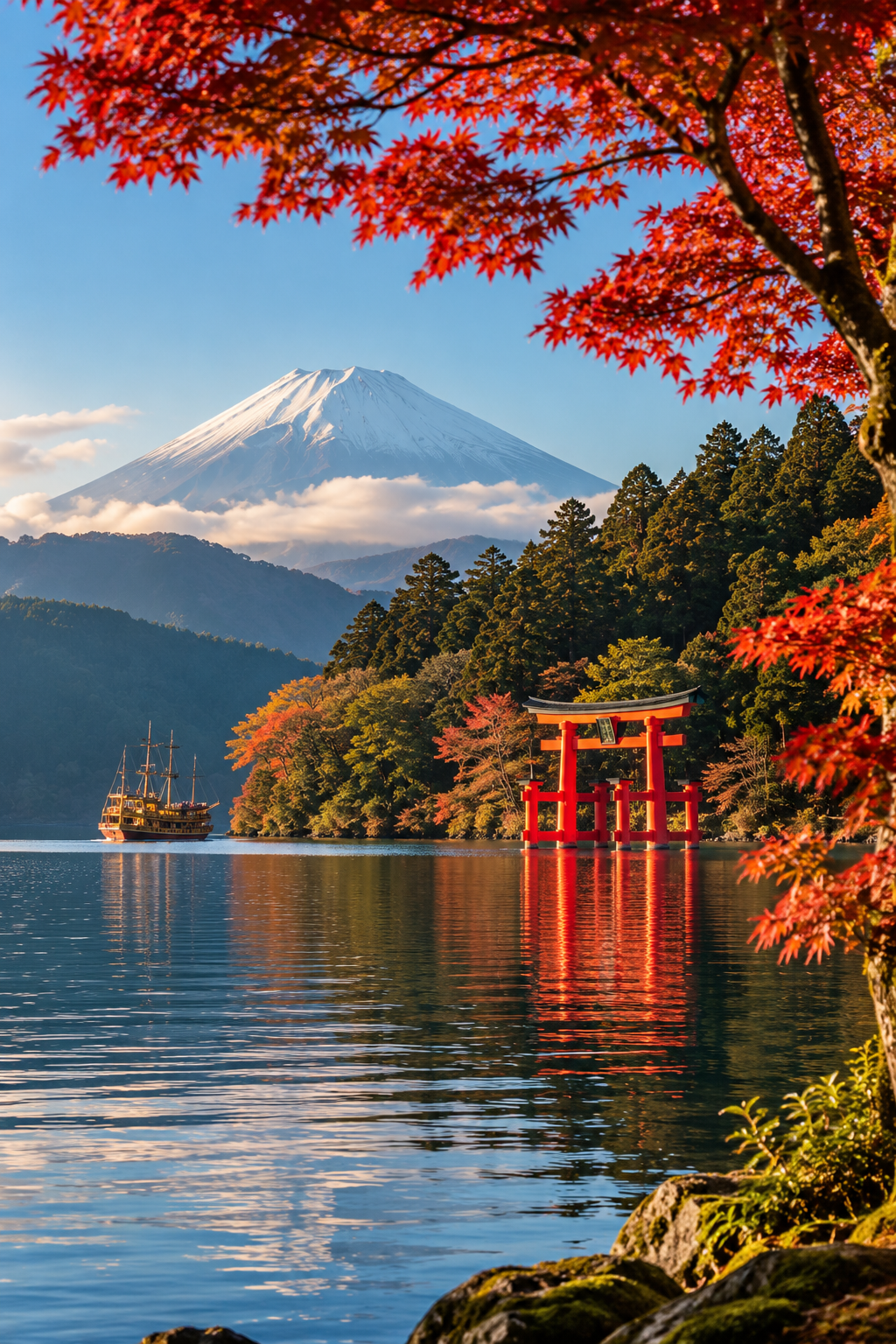
- Lake Ashi: Enjoy mountain scenery, lakeside walks and views towards Mount Fuji when conditions are clear.
- Historic shrines: Discover the atmospheric setting of Hakone Shrine among the trees beside the lake.
- Volcanic landscapes: See the steaming vents and unusual terrain of Ōwakudani.
- Traditional hospitality: Stay in a ryokan and experience seasonal Japanese cuisine.
- Art and gardens: Explore Hakone’s museums and outdoor art in a beautiful mountain setting.
Lake Ashi and the View Towards Mount Fuji
Lake Ashi, also known as Ashinoko, is one of Hakone’s most recognisable landscapes. Surrounded by wooded mountains, the lake offers a peaceful setting for a walk, a scenic boat journey or simply a pause to take in the view.
On clear days, Mount Fuji may be visible beyond the surrounding mountains. The view is never guaranteed: cloud, mist and changing weather can obscure the summit. That uncertainty is part of the experience, and it is worth allowing time rather than planning your entire visit around a single photograph.
A Cruise Across the Lake
A sightseeing cruise provides a relaxed way to appreciate the landscape from the water. It can also connect conveniently with other parts of a Hakone sightseeing itinerary, depending on the route and current transport arrangements.
Hakone Shrine and Its Lakeside Torii
Set among tall cedar trees near the shore, Hakone Shrine is known for its traditional architecture and spiritual atmosphere. Its striking red torii at the water’s edge has become one of the region’s most photographed sights.
The shrine is a place of worship, so visit with consideration for other visitors and local customs. If you hope to photograph the lakeside gate, allow extra time during busy periods.
Photography tip: Early morning can offer softer light and a quieter atmosphere. Check the forecast for possible Mount Fuji views, but enjoy the lake even when the mountain is hidden.
Ōwakudani: Hakone’s Dramatic Side
Hakone’s peaceful lakes and forested slopes tell only part of the story. At Ōwakudani, the region’s volcanic origins become unmistakable. Steam rises from geothermal vents, mineral-stained ground creates an unusual palette of colours, and the landscape feels very different from the traditional streets and shrines below.
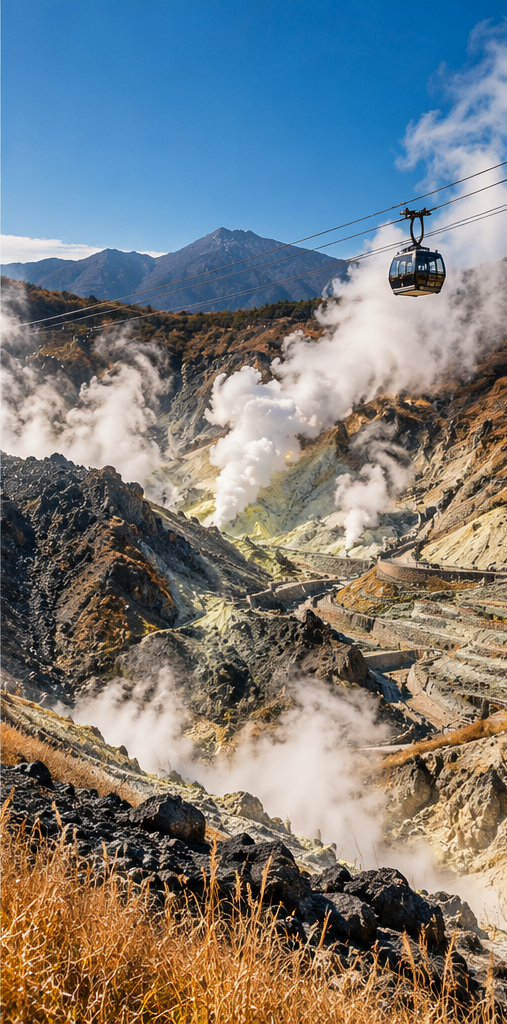
One of the most memorable ways to reach the area is by the Hakone Ropeway, which travels above mountain slopes and volcanic terrain. On clear days, views may extend towards Mount Fuji.
Ōwakudani is also known for kuro-tamago, eggs cooked in naturally heated, sulphur-rich waters that darken their shells. They are a local speciality and a distinctive part of the visitor experience.
The geothermal environment is active, and access can change according to volcanic gases, weather or safety conditions. Check official local information before travelling, follow all signs and instructions, and remain within permitted visitor areas.
Important: Ōwakudani is not an ordinary walking area. Volcanic gases can pose a risk, and some paths or facilities may close. Check current restrictions before setting out, particularly if you have respiratory or other relevant health concerns.
Onsen and Traditional Ryokan
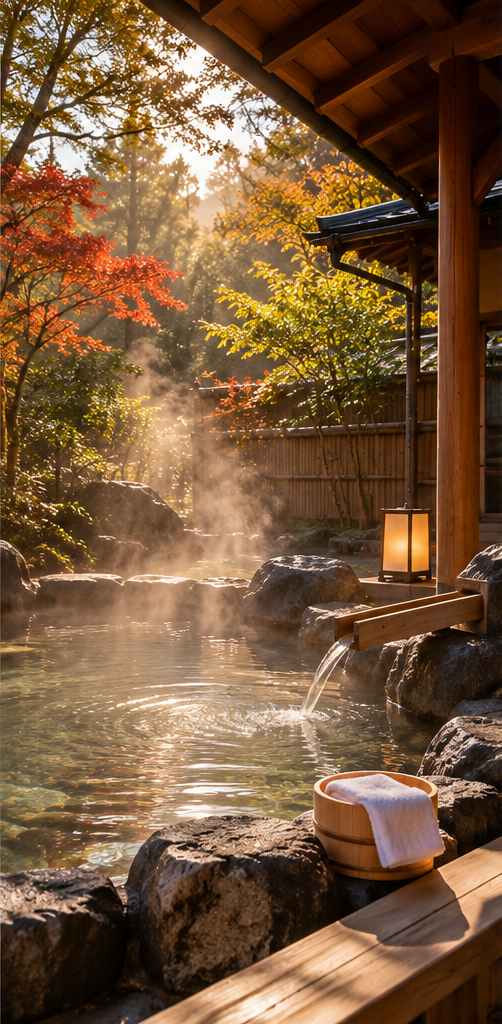
For many travellers, the defining Hakone experience is a stay in a traditional Japanese inn. A ryokan offers a different rhythm from a conventional hotel: considered hospitality, seasonal details, Japanese-style rooms and, in many properties, access to natural hot spring bathing.
Experience Japanese Bathing Culture
Onsen bathing is an opportunity to relax and appreciate the region’s geothermal heritage. Many traditional baths are communal, while some ryokan offer private bathing options. Facilities and rules vary, so check what is included before booking.
Seasonal Kaiseki Dining
Kaiseki is a refined style of Japanese multi-course dining that celebrates seasonal ingredients, presentation and balance. At a ryokan, dinner can be one of the highlights of the stay, offering an introduction to local flavours and the care behind Japanese hospitality.
Choosing the Right Ryokan
Consider the atmosphere you want: a secluded retreat, a traditional inn close to transport, a property with private baths or a stay focused on exceptional dining. Room styles, meal plans, bathing facilities and access arrangements differ between properties.
If a private onsen is important to you, confirm whether it is attached to the room, reservable for private use or shared with other guests. These details can make a meaningful difference to your stay.
Art, History and the Old Tōkaidō Road
Hakone’s cultural character extends well beyond its hot springs. The area sits along the historic Tōkaidō route that connected Edo, present-day Tokyo, with Kyoto. Travellers once crossed the mountains on journeys that required time, endurance and places to rest.
This history remains part of the region’s identity. Historic paths, traditional buildings and the atmosphere of its old post-town landscapes offer a glimpse into an earlier era of Japanese travel.
Hakone Open-Air Museum
For a change of pace, the Hakone Open-Air Museum combines sculpture and art with an outdoor setting. It is an appealing addition for visitors who want to balance natural scenery with cultural discovery.
Gardens, Museums and Local Craft
The wider region has museums, landscaped gardens and opportunities to discover traditional craft. Hakone yosegi zaiku, a form of intricate Japanese wood marquetry, is particularly associated with the area and makes a distinctive reminder of its craft heritage.
Rather than trying to visit everything, choose one or two cultural stops that genuinely interest you. This leaves room to enjoy the mountains, meals and quieter moments that make Hakone special.
Hakone Through the Seasons
Hakone changes character throughout the year. The best time to visit depends on whether you prefer spring flowers, lush summer scenery, autumn colour or crisp winter air.
- Spring · Fresh Green and Blossoms As the landscape awakens, gardens and wooded areas take on fresh colour. Flowering periods vary with location and weather, so check local conditions if you are planning around blossoms.
- Summer · Forests and Mountain Air Green hills and shaded paths provide a refreshing contrast to the heat of the cities. Rain, humidity and cloud can affect visibility, and mountain weather can change quickly.
- Autumn · A Palette of Red and Gold Autumn foliage can transform the hillsides and lakeside scenery. Popular viewpoints and accommodation may be busy during peak colour periods, so advance planning is advisable.
- Winter · Crisp Views and Hot Springs Cooler days can make an onsen stay especially appealing, and Mount Fuji may be visible in clear conditions. Temperatures can be cold, and snow or ice may affect mountain transport and walking routes.
No season guarantees a particular view. Allow some flexibility in your plans, especially if Mount Fuji is a priority, and enjoy the experiences that remain rewarding whatever the weather.
How to Get Around Hakone
Hakone is a popular excursion from Tokyo, but it deserves more than a rushed checklist if you want to experience its onsen culture and mountain atmosphere.
One Day
Choose a manageable combination of experiences, such as Lake Ashi and a cruise, the Hakone Ropeway and Ōwakudani, or a museum with time for a scenic stop. Check connections and opening times before deciding how much to fit in.
One or Two Nights
Stay in a ryokan, enjoy an onsen, take your time over dinner and explore at a gentler pace. An overnight visit makes it easier to balance sightseeing with genuine rest.
Trains, Buses and the Ropeway
Hakone has a network of railways, buses, cable cars, ropeways and sightseeing boats. These connections can make a varied itinerary possible without driving, but journey times and transfer points matter.
Check current timetables, service notices and any transport pass conditions before travelling. A pass may be convenient if you plan to use several included services, but compare the coverage with your actual itinerary.
Allow Time Between Attractions
Mountain roads, transfers and queues can take longer than expected, particularly during busy seasons. Avoid scheduling every part of the day too tightly. Leaving room for a scenic stop or a leisurely meal often makes the experience more enjoyable.
Practical Tips for a Better Hakone Stay
- Check the forecast. Cloud and mist can obscure Mount Fuji, while rain can affect mountain transport and walking conditions.
- Book accommodation early. Popular ryokan and rooms with private baths can have limited availability, especially during peak seasons.
- Understand your meal plan. If dinner is included with your ryokan stay, check the serving time and let the property know about dietary requirements in advance.
- Follow onsen etiquette. Bathing rules differ by property. Read the instructions and check tattoo policies if relevant to your visit.
- Pack suitable layers. Mountain temperatures can differ from Tokyo, and weather can change during the day.
- Check accessibility. Some stations, viewpoints and traditional properties involve stairs, slopes or uneven surfaces. Confirm arrangements if you need step-free access.
- Verify operating information. Ropeways, boats, museums and volcanic areas may have closures or altered services. Check before departure.
- Travel respectfully. Follow shrine guidance, keep noise low in shared spaces and respect the privacy of local residents.
Expert advice: If you have only one day, choose a small number of connected experiences. If your priority is relaxation, give Hakone an overnight stay and make the ryokan part of the destination rather than simply somewhere to sleep.
Why Hakone Stays With You
Hakone’s appeal lies in its contrasts. There is the raw energy of the volcanic valley, the stillness of the lake, the quiet presence of the shrine and the warmth of an outdoor bath on a cool evening.
A traditional ryokan adds another dimension. Meals follow the seasons, rooms are designed for calm, and the pace of the stay encourages you to pay attention to details that can be missed on a busy sightseeing trip.
For some travellers, Hakone is a chance to see Mount Fuji. For others, it is about art, history, nature or the pleasure of a few restorative days away from the city. The region works best when you choose the experiences that matter to you and leave space to enjoy them.
Discover the Many Sides of Hakone
Hakone combines mountain scenery, lakeside shrines, volcanic landscapes, art and traditional hospitality within a region that is accessible from Tokyo. It can be explored as a scenic day trip or enjoyed more deeply through an overnight stay.
A cruise on Lake Ashi, a visit to Hakone Shrine, the dramatic terrain of Ōwakudani and the experience of a traditional onsen each reveal a different side of the destination.
For a more considered journey, choose a few highlights, travel at a comfortable pace and allow time to enjoy the details. Hakone is not simply a place to pass through on the way to somewhere else; it can be a rewarding destination in its own right.
PLAN YOUR JAPAN JOURNEY
Make Time for Hakone
From traditional ryokan and restorative onsen stays to cultural discoveries and scenic mountain journeys, explore Japan at a pace that suits you.
Travel note: Transport schedules, attraction access, volcanic restrictions and weather conditions can change. Check current official information before travelling, particularly for Ōwakudani and the Hakone Ropeway.
