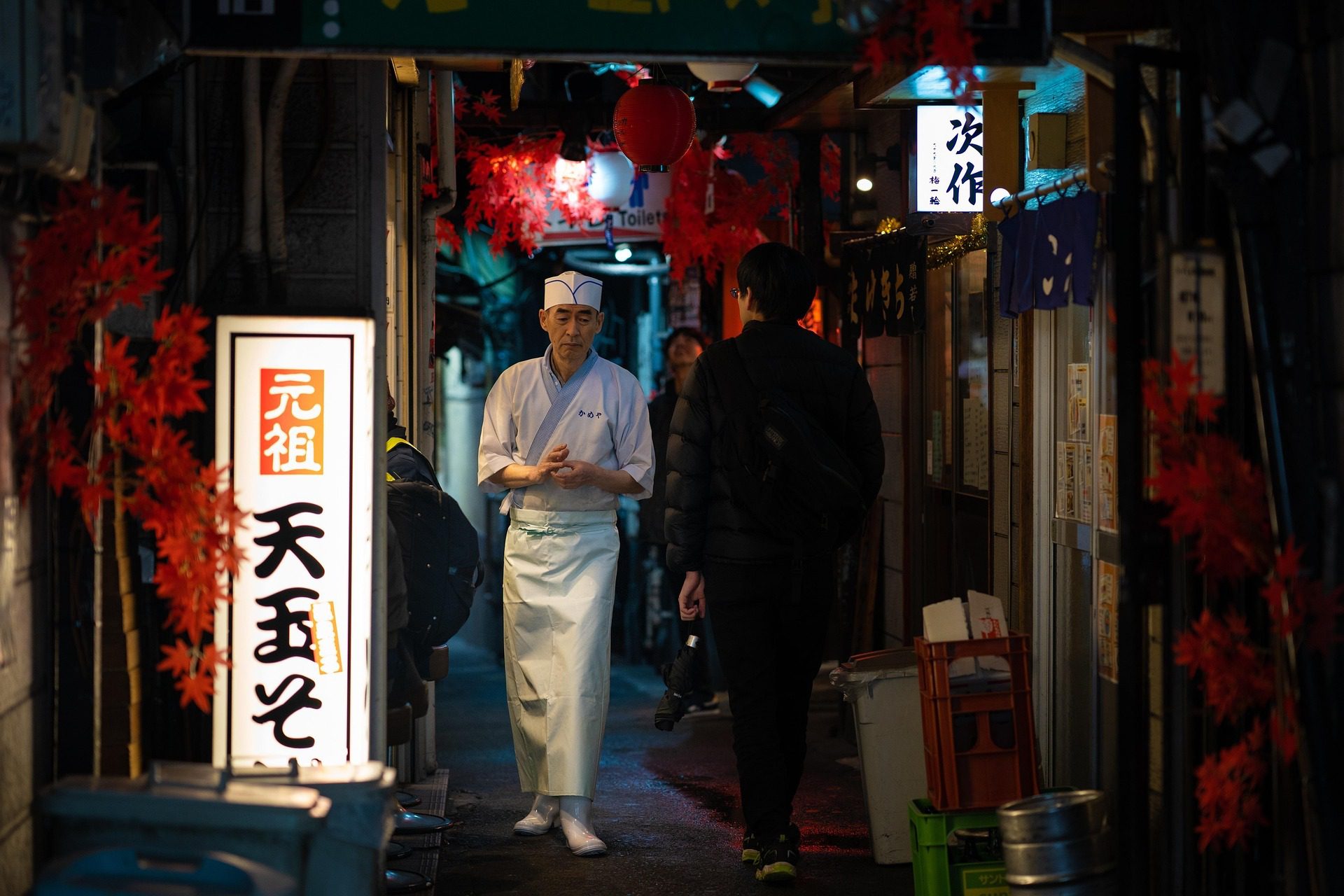
From Tokyo’s street markets to Kyoto’s refined kaiseki dining and geisha district evenings
- Japan’s cuisine is not just food — it is ritual, seasonality, and precision.
- From bustling fish markets to quiet tea rooms, every meal reflects a deeper cultural philosophy of balance, craft, and respect for ingredients.
- This journey moves between street-level energy and refined dining traditions, revealing Japan through taste as much as place.
It begins in Tokyo — where food is movement.
A city defined by constant energy, Tokyo is also one of the world’s most intricate culinary landscapes. Morning begins at Tsukiji’s outer markets, where seafood, produce and street food stalls create a living rhythm of preparation and trade.
In Asakusa, traditional flavours meet historic streets, while Shibuya and Ginza reveal how Japan’s capital effortlessly balances casual dining with Michelin-level refinement.
Sushi counters, standing ramen bars and seasonal tasting menus all coexist within a single city — each reflecting a different expression of Japanese craft.
A stay in Tokyo anchors the experience in comfort and design. Recommended hotels include Park Hotel Tokyo (art-focused skyline stays), Palace Hotel Tokyo (ultra-luxury calm near the Imperial Palace), or Hotel The Celestine Ginza (boutique refinement in a central dining district).
From Tokyo, the journey shifts toward refinement in Kyoto.
Arriving by bullet train, the pace changes immediately. Kyoto is quieter, more deliberate — a city where food is deeply tied to season, presentation, and tradition rather than speed or abundance.
In Gion, narrow streets lead to kaiseki dining rooms where multi-course meals unfold like seasonal poetry. Each dish is composed with precision, reflecting both nature and time of year.
Kyoto’s food culture extends beyond restaurants — into tea ceremonies, temple cuisine, and hands-on cooking classes that preserve centuries-old techniques.
For accommodation, Kyoto offers exceptional stays such as The Gate Hotel Kyoto Takasegawa (modern comfort beside historic streets), Hotel The Mitsui Kyoto (luxury heritage-inspired design), or Hoshinoya Kyoto (riverfront ryokan retreat reached by boat).
The culinary journey concludes not in excess, but in understanding.
From Tokyo’s vibrant markets to Kyoto’s quiet refinement, Japan reveals itself through flavour, discipline and hospitality — a philosophy known as omotenashi, where every detail is considered for the guest experience.
The Route at a Glance
This 5-night culinary journey unfolds between Japan’s two great food capitals:
- Tokyo — 3 nights
- Kyoto — 2 nights