From Tokyo’s neon skyline to alpine silence, samurai towns, and sacred temple cities
- Japan reveals itself in layers.
- Futuristic cities dissolve into preserved Edo streets. Alpine valleys open into quiet onsen towns. Ancient temples sit in the shadow of modern skylines.
- To travel through Japan is not simply to move between places — it is to move between different versions of time.
It begins in Tokyo.
A city that rarely softens its edges, Tokyo is defined by motion. Glass towers rise above rail lines, and entire districts pulse with constant rhythm. Yet beneath the surface, it is a city of quiet contradictions.
In Asakusa, temple bells break through the noise of traffic. In Shibuya, movement becomes choreography. Around the Imperial Palace, the city briefly slows, as if gathering itself.
Then there are places where Tokyo disappears entirely — into forested silence at Meiji Shrine, where gravel paths and wooden gates replace concrete and glass.
Beyond the city, the landscape shifts quickly. In Hakone, steam rises from volcanic ground, and Mount Fuji appears in fragments between shifting cloud and forested ridges.
In Tokyo, the journey begins in height and stillness above the city. A stay at Park Hotel Tokyo places you inside the skyline itself, while The Peninsula Tokyo offers a more classical interpretation of urban luxury overlooking the Imperial Palace.
From Tokyo, the route bends west toward Nagoya, though the city itself is not the destination.
What matters lies beyond it — the Nakasendo Trail, once used to connect Edo and Kyoto through mountain passes. Even a short walk between Magome and Tsumago feels like stepping outside of time.
Wooden houses line stone paths. Forest closes in softly from both sides. The modern world fades until only footfall and wind remain.
In the Japanese Alps, Takayama feels almost suspended.
Life moves more slowly here. The air is colder, clearer. Wooden merchant houses remain intact, and morning markets spill into narrow streets as they have for generations.
Evenings belong to stillness. Hot spring baths rise from natural ground heat, and meals unfold in precise seasonal rhythm.
Here, the stay becomes part of the landscape itself at a traditional ryokan such as Hoshokaku Ryokan or Hidatei Hanaougi, where onsen water, tatami floors, and mountain silence replace the language of modern hotels.
Further north, the mountains soften into cultural memory.
Kanazawa is often described as elegant, but its beauty is not decorative — it is preserved. Samurai districts still carry their original layout, and Kenroku-en Garden shifts with the seasons.
A stay at ANA Crowne Plaza Kanazawa places you close to this balance of history and modern ease, where traditional districts remain within walking distance.
The journey then turns toward water and memory.
Hiroshima carries a quiet weight. Peace Memorial Park sits open at its centre, while the city continues forward with restraint and clarity.
Just offshore, Miyajima Island feels almost unreal in contrast, where the great torii gate appears to float on water.
A stay at Hotel Granvia Hiroshima keeps both worlds within reach — reflection in the city, and stillness by the sea.
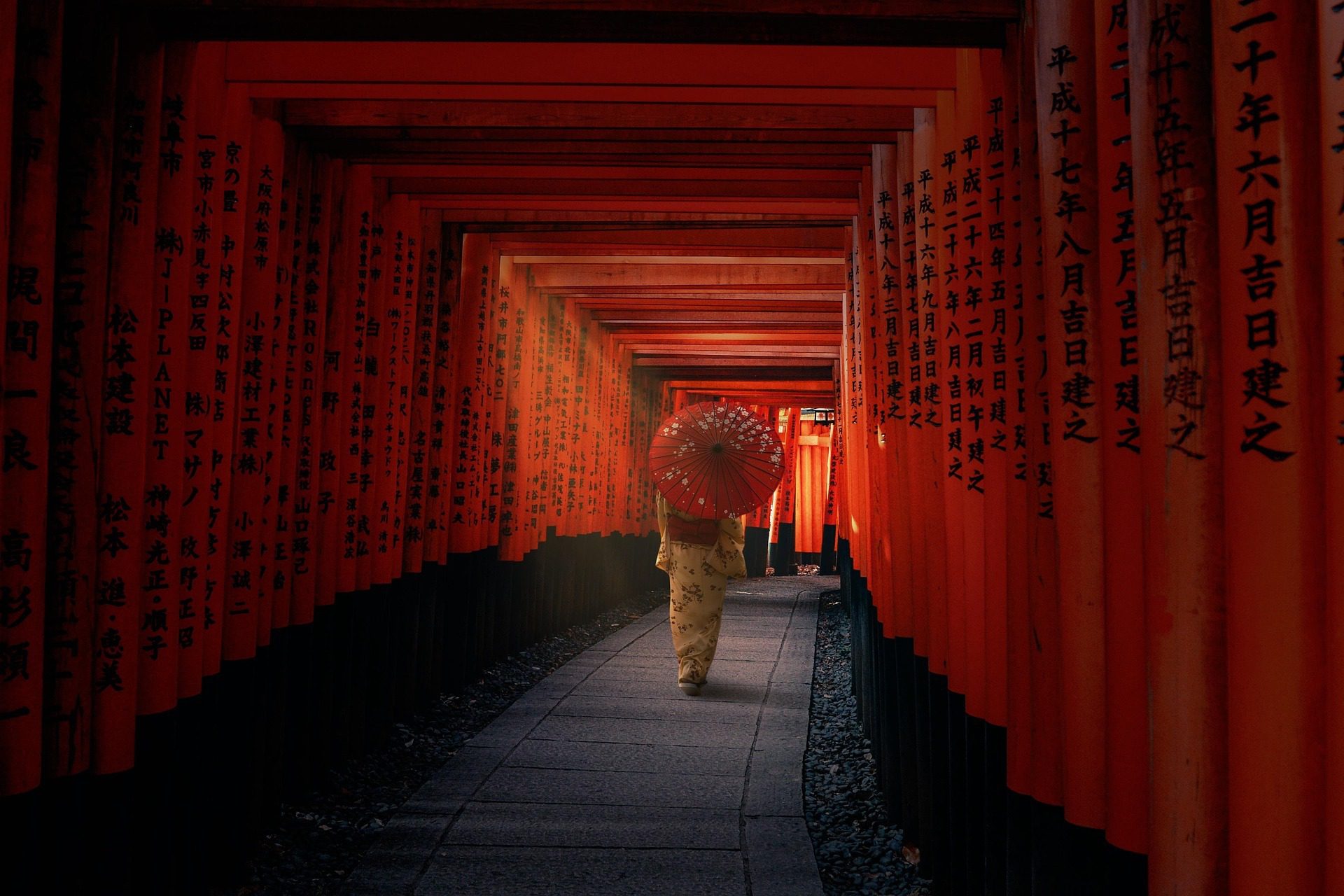
Kyoto brings the journey into its final form.
If Tokyo is motion, Kyoto is memory.
The city unfolds slowly through temples, gardens, and streets where tradition is not preserved — it is lived.
Kinkaku-ji reflects gold across still water. Kiyomizu-dera opens toward the hills. Gion holds onto the rhythm of older centuries.
A stay at The Gate Hotel Kyoto Takasegawa or Garrya Nijo Castle anchors you within walking distance of Kyoto’s cultural core.
In the end, this is not a route defined by distance.
It is defined by contrast.
Between speed and stillness. Between glass and wood. Between cities that reinvent themselves daily and towns that have barely changed in centuries.
Japan does not offer a single identity — it offers many, layered like sediment over time.
The Route at a Glance
- Tokyo — 3 nights (Park Hotel Tokyo / The Peninsula Tokyo)
- Nagoya / Nakasendo — 2 nights
- Takayama — 2 nights (Hoshokaku Ryokan / Hidatei Hanaougi)
- Kanazawa — 2 nights (ANA Crowne Plaza Kanazawa)
- Hiroshima — 2 nights (Hotel Granvia Hiroshima)
- Kyoto — 3 nights (Garrya Nijo Castle / The Gate Hotel Kyoto)