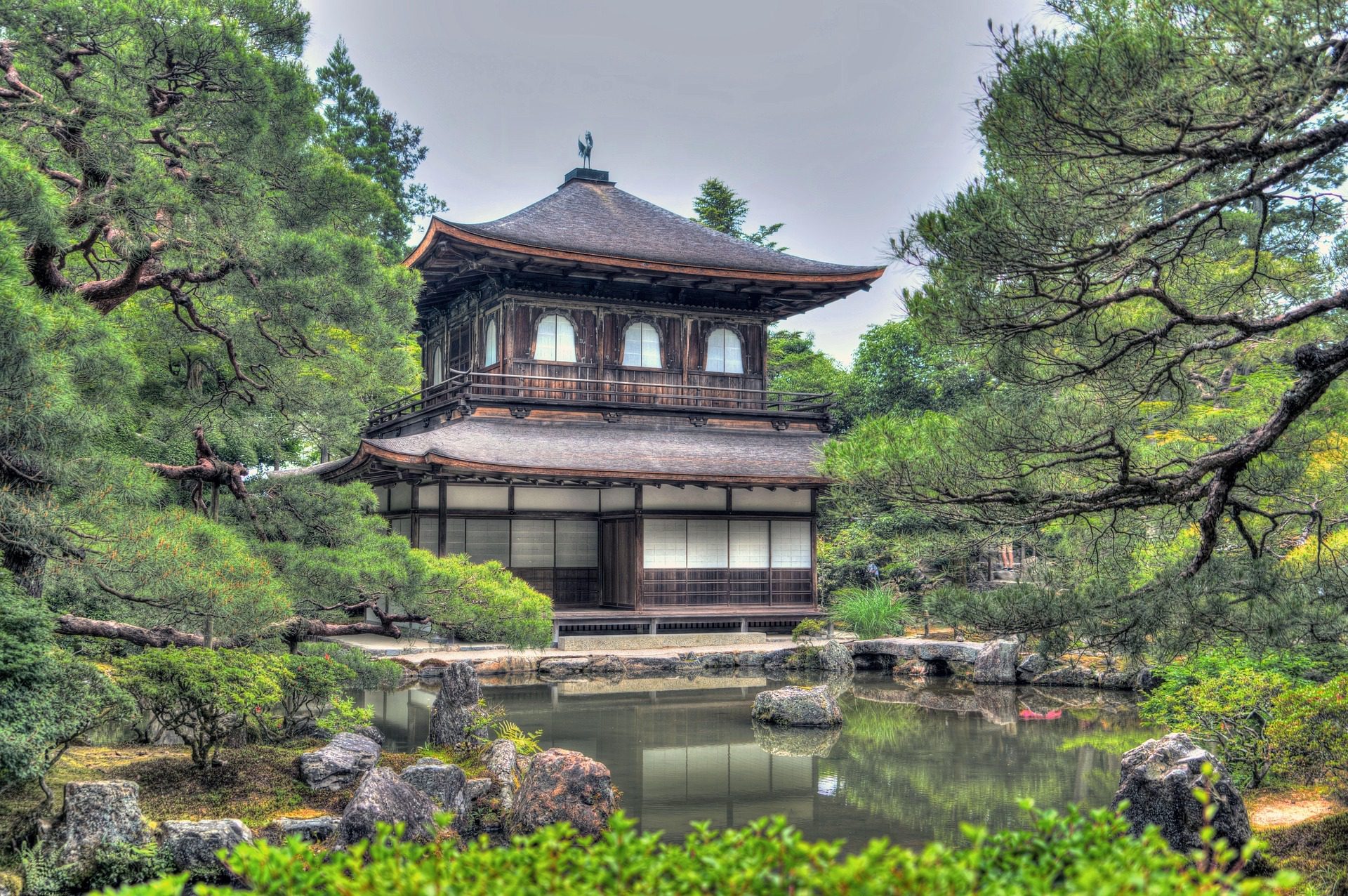
Ginkaku-ji Temple, Kyoto’s Silver Pavilion, is one of the city’s calmest and most reflective sacred spaces. Unlike the golden grandeur of Kinkaku-ji, this temple focuses on simplicity, balance, and Zen-inspired restraint. Visitors come here to slow down, walk the meditative gardens, and experience the quiet harmony that defines Kyoto’s more contemplative side.
History of Ginkaku-ji
Ginkaku-ji was originally built in 1482 as a private villa for shogun Ashikaga Yoshimasa. After his retirement, it was converted into a Zen Buddhist temple, reflecting the values of simplicity, contemplation, and natural harmony. Over centuries, the temple has remained a spiritual and cultural landmark, preserving the quiet aesthetic principles of the Higashiyama period.
- Built in 1482 as a private shogunal villa
- Converted into a Zen temple after retirement of Ashikaga Yoshimasa
- Reflects principles of simplicity and natural balance
- Key site of Higashiyama culture in Kyoto
The Silver Pavilion
At the center of Ginkaku-ji stands the Silver Pavilion itself. Despite its name, the structure was never covered in silver. Its natural wooden surfaces and minimalist design create a gentle, serene atmosphere. The pavilion reflects softly in the adjacent pond, complementing the surrounding gardens and pathways in harmonious tranquility.
- Natural wood construction with subtle elegance
- Reflects Zen aesthetics and simplicity
- Softly mirrored in the pond for contemplative effect
- Serves as focal point for garden views
Zen Gardens and Walking Paths
The gardens at Ginkaku-ji are masterpieces of meditation in landscape form. The white sand garden features wave-like patterns, with a prominent sand cone representing Mt. Fuji. Moss gardens provide a softer contrast, with shaded paths, stone steps, and quiet forested areas. Walking these paths creates a slow, reflective experience, allowing visitors to fully absorb the balance between simplicity and nature.
- White sand garden with symbolic Mt. Fuji cone
- Moss gardens offering shaded, tranquil walkways
- Stone steps and forest paths for meditative exploration
- Landscapes change subtly as visitors move through the grounds
Viewpoint Path
A short uphill path leads to a viewpoint overlooking Kyoto’s rooftops and surrounding hills. The climb is gentle but rewarding, offering a perspective where the serene temple grounds contrast with the distant cityscape. The path reinforces Ginkaku-ji’s principle of observation, reflection, and appreciation of subtle beauty.
- Gentle uphill walk suitable for most visitors
- Panoramic view of Kyoto city and surrounding hills
- Contrast between quiet temple and urban landscape
- Perfect spot for photography and contemplative pauses
Hidden Gems & Local Experiences
Beyond the main pavilion and gardens, Ginkaku-ji offers quieter details for those seeking deeper engagement:
- Small meditation corners for private reflection
- Seasonal flower arrangements and bamboo-lined paths
- Nearby artisan shops in the Philosopher’s Path neighborhood
- Subtle stone lanterns and carved inscriptions within moss gardens
Seasonal Highlights
The experience at Ginkaku-ji changes with each season, enhancing its meditative quality:
Spring: Cherry Blossoms and Renewal
- Late March to early April: cherry blossoms bloom along pathways
- Moss gardens appear vibrant with spring moisture
- Soft morning light enhances pavilion reflections in the pond
Summer: Cool Shadows and Forest Walks
- Shaded moss gardens offer respite from summer heat
- Quiet footpaths allow mindful, slow-paced walking
- Nearby Philosopher’s Path provides extended riverside exploration
Autumn: Golden and Crimson Harmony
- Late October to early November: maple leaves turn fiery red and gold
- Contrasts beautifully with soft moss and wooden pavilion
- Perfect lighting for outdoor photography and contemplation
Winter: Silence and Stillness
- Snow-covered gardens create a rare sense of pure quiet
- Minimal tourists allow personal reflection and meditation
- Subtle winter light enhances textures of wood, stone, and moss
Practical Visiting Information
- Best season: Spring or Autumn for full visual impact
- Time needed: Approximately 1 hour for temple and gardens
- Photography: Allowed outdoors; interior of pavilion not accessible
- Access: Bus from Kyoto Station or walking via Philosopher’s Path
- Admission: Modest fee supports preservation of gardens and temple
Extended Kyoto Cultural Itinerary
Ginkaku-ji is easily integrated into a broader Kyoto day of culture and contemplation:
- Morning: Explore Ginkaku-ji gardens and pavilion
- Midday: Walk along the Philosopher’s Path with nearby tea houses
- Afternoon: Visit nearby Nanzen-ji Temple or Eikan-do for Zen gardens
- Evening: Explore traditional Kyoto streets in Higashiyama
Why Visit Ginkaku-ji
Ginkaku-ji offers peace through restraint, simplicity, and natural beauty. Unlike grand temples, its power comes from quiet reflection, carefully arranged gardens, and the soft elegance of the Silver Pavilion. Visitors leave with a sense of calm, clarity, and appreciation for Kyoto’s more meditative cultural heritage.
Final Thoughts
For travelers seeking a serene and introspective experience, Ginkaku-ji stands as one of Kyoto’s most meaningful stops. Its gardens, moss, sand patterns, and the reflective pavilion create a slow, contemplative journey through Japanese aesthetics and Zen philosophy. The temple encourages mindfulness, stillness, and a deep connection with nature, leaving visitors rejuvenated and thoughtful.