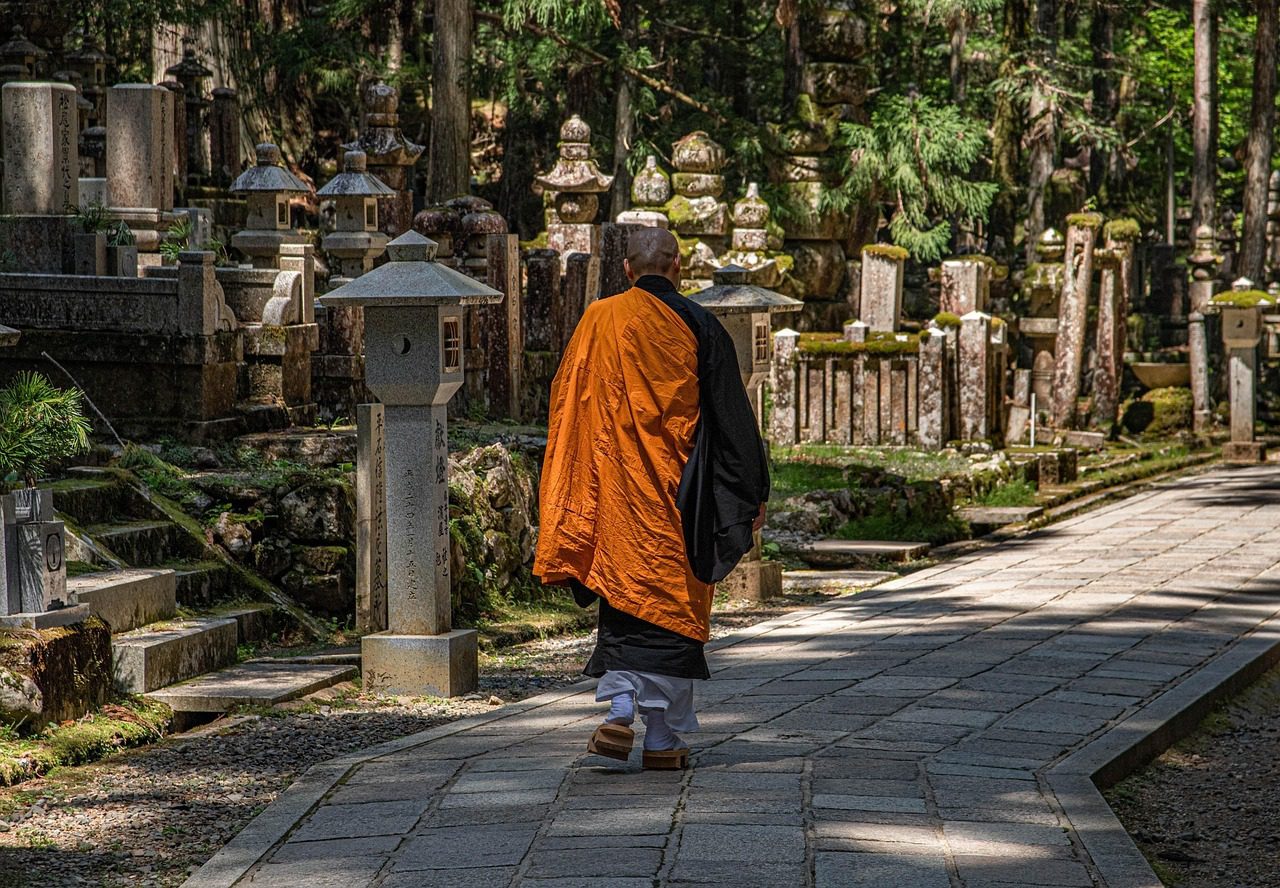
From Mount Koya’s temple mountains to Nara’s ancient capital, Mie’s coastal shrines, and Osaka’s street food streets
- Japan reveals itself through spirituality, coastline, and cuisine.
- Sacred mountains, ancient capitals, coastal villages, and modern cities form a compact journey through the cultural heart of Kansai.
- This itinerary is defined by contrast — between silence and flavour, ritual and street life, tradition and urban energy.
It begins in Mount Koya.
Hidden among cedar forests, Mount Koya (Koyasan) is one of Japan’s most sacred spiritual centres. The journey begins in silence, surrounded by temple grounds and mountain air.
A temple stay at Eko-in or Fukuchi-in introduces monastic life through morning prayers, shojin ryori cuisine, and the still rhythm of Buddhist tradition.
At night, lantern-lit paths and forest silence define the atmosphere more than any modern comfort.
From the mountains, the journey descends into Nara.
Japan’s first capital offers a softer rhythm — temples, open parkland, and centuries-old heritage woven into daily life.
At Tōdai-ji Temple, the Great Buddha sits within vast wooden halls, while Nara Park stretches outward with freely roaming deer and open walking paths.
A stay at Nara Hotel places the experience close to the historic centre, blending Meiji-era architecture with the calm of the ancient capital.
From Nara, the journey continues toward the coast.
The Mie region connects sacred pilgrimage sites with coastal life. At Ise Grand Shrine, one of Japan’s most important spiritual places, forest paths and wooden bridges define the experience.
A stay at Amanemu or a seaside ryokan in Futaminoura brings the coast into focus, where hot springs overlook the ocean and Meotoiwa’s “wedded rocks” rise from the sea.
In Toba and Kashikojima, pearl cultivation and seafood traditions reflect a deep connection between land and water.
From the coast, the journey moves into the city.
Osaka introduces energy, flavour, and movement. Streets are defined by food culture, neon light, and constant activity.
At Osaka Castle, history anchors the skyline, while Dotonbori becomes a centre of nightlife, street food, and urban rhythm.
A stay at Swissôtel Nankai Osaka or Conrad Osaka places the city at your feet, with direct access to both dining districts and skyline views.
Across the city, each district reveals a different personality.
In Shinsaibashi, shopping and fashion dominate. In Namba, nightlife and food culture take over. In Den Den Town, electronics and pop culture shape the streetscape.
Osaka Aquarium and observation decks like Abeno Harukas add a broader perspective to the city’s fast-moving rhythm.
In the end, this journey is defined by proximity.
Not long distances — but powerful contrasts.
From temple silence to coastal seafood culture, from ancient capitals to neon streets, Kansai compresses Japan into a region of layered identity.
To travel this route is to move between three worlds — sacred mountains, living coastlines, and vibrant cities — all within a single journey.
The Route at a Glance
- Mount Koya — 1 night (Eko-in / temple lodging)
- Nara — 2 nights (Nara Hotel)
- Mie Coast — 2 nights (Amanemu / seaside ryokan)
- Osaka — 2 nights (Swissôtel Nankai Osaka / Conrad Osaka)