From Tokyo’s urban rhythm to the ancient Nakasendo Trail, Kyoto’s heritage streets, Miyajima’s coastal calm, and the lakes beneath Mount Fuji
- Japan reveals itself in layers of landscape and memory.
- Cities, mountain trails, lakeside retreats, and coastal shrines sit within a single journey, each shaped by a different sense of time and place.
- This itinerary is defined by contrast — from modern energy to forest silence, from cultural depth to natural stillness.
It begins in Tokyo.
A city of constant movement, Tokyo sets the tone of the journey. Beneath its glass towers and rail networks, layers of tradition and modern life coexist in tight rhythm.
In Asakusa, temple streets preserve older Tokyo. In Shibuya, movement becomes energy itself. Between them, quieter neighbourhoods offer brief moments of stillness within the scale of the city.
Despite its intensity, Tokyo always holds space for reflection — in gardens, shrines, and riverside paths that soften its edges.
A stay at The Prince Gallery Tokyo Kioicho or Park Hotel Tokyo offers elevated views of the city’s shifting skyline, where light and structure define the atmosphere above street level.
From Tokyo, the journey moves into the mountains.
The Kiso Valley marks a shift in pace. Here, the historic Nakasendo Trail once connected Edo and Kyoto through forested passes and mountain villages.
Walking between Magome and Narai reveals a landscape shaped by centuries of travel — wooden buildings, stone paths, and deep forest silence that gradually replaces the modern world.
Life here moves at a slower rhythm. The air feels older, the soundscape reduced to wind, footsteps, and distant water.
A stay at a traditional ryokan in the Kiso Valley, such as a countryside inn along the trail, extends this atmosphere into night — quiet, minimal, and deeply rooted in place.
From the mountains, the journey continues to Kyoto.
Kyoto is where Japan’s cultural memory becomes visible in its most refined form. Temples, shrines, and gardens are not separate from the city — they define it.
At Kinkaku-ji, gold reflects across still water. At Kiyomizu-dera, wooden terraces open toward seasonal hills. Along narrow streets, tea houses and traditional architecture preserve older rhythms of life.
A stay at Hotel Granvia Kyoto or The Thousand Kyoto offers access to both the historic districts and the modern flow of the city, where tradition and convenience sit side by side.
The journey then turns toward the coast.
Miyajima offers a quieter expression of Japan — a place where forested slopes meet the sea and sacred architecture blends into natural landscape.
The iconic floating torii gate stands at the edge of water and tide, shifting its presence with the rhythm of the sea and time of day.
A ryokan stay on or near the island, such as Iwaso Ryokan, places the experience within walking distance of forest paths, shrines, and coastal light.
From Miyajima, the landscape opens toward Mount Fuji.
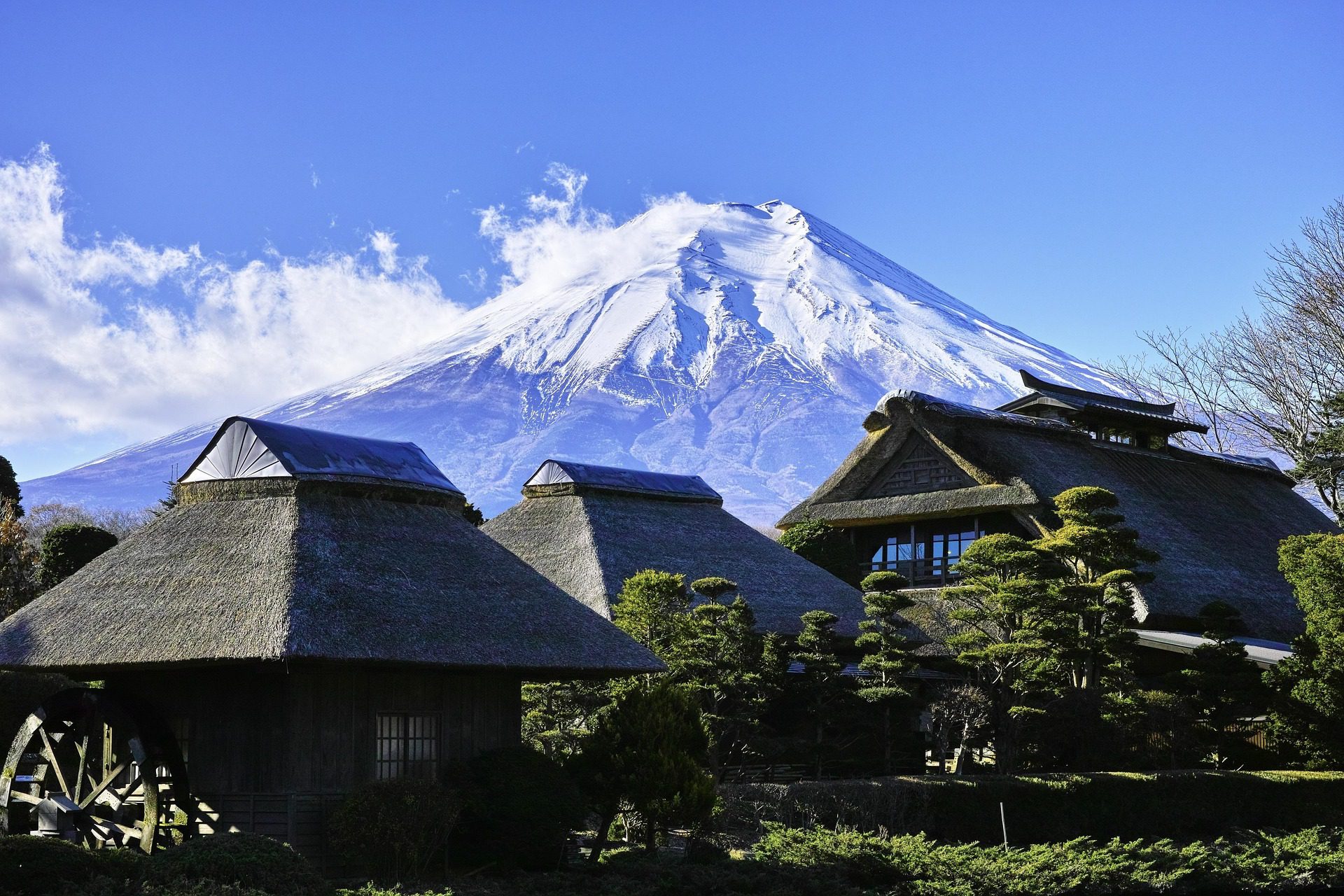
The Lake Kawaguchi region combines water, mountain, and sky into a single horizon. On clear days, Mount Fuji rises above the lake, framed by seasonal changes in light and weather.
This is a region of stillness and open space — where outdoor walks, lakeside views, and quiet resorts define the pace of the day.
A stay at Hoshinoya Fuji or Fuji View Hotel reflects this environment, where architecture is shaped around the landscape rather than placed upon it.
The journey returns once more to Tokyo.
After mountains, trails, and lakes, the city feels different — familiar yet re-framed by distance and contrast.
The final evening is often spent revisiting neighbourhoods, dining, or simply observing the city’s final rhythm before departure.
In the end, this journey is defined by movement through contrast.
Not just between places — but between ways of seeing Japan.
From city to trail, from temple to coastline, from mountain lake to modern skyline, each landscape reshapes the next.
To travel this route is to experience Japan as a series of connected silences — each one different, each one essential.
The Route at a Glance
- Tokyo — 4 nights
- Kiso Valley — 2 nights
- Kyoto — 2 nights
- Miyajima — 1 night
- Mount Fuji Region — 2 nights
- Tokyo — 1 night