From Tokyo’s urban rhythm to the sacred calm of Ise, Kyoto’s heritage streets, and Yamashiro’s mountain springs
- Japan reveals itself through balance.
- Modern cities, sacred shrines, coastal landscapes, and mountain onsen regions sit within the same journey, yet feel entirely separate in atmosphere.
- This itinerary is defined not by distance, but by transition — from urban energy to coastal stillness and finally to thermal silence.
It begins in Tokyo.
A city of constant motion, Tokyo sets the pace of the journey. Glass towers, railway lines, and dense districts create an environment that feels endlessly active, yet deeply structured beneath the surface.
Between modern architecture and historic temples, Tokyo shifts constantly. In Asakusa, tradition remains visible. In Shibuya, movement becomes rhythm. In quieter districts, the city briefly slows.
Despite its scale, Tokyo always offers space for pause — in gardens, shrines, and along riverbanks where the city softens its edges.
A stay at Park Hotel Tokyo or The Prince Gallery Tokyo Kioicho places the city within reach while offering elevated views of its layered skyline and seasonal light.
From Tokyo, the journey turns toward the sea and coast.
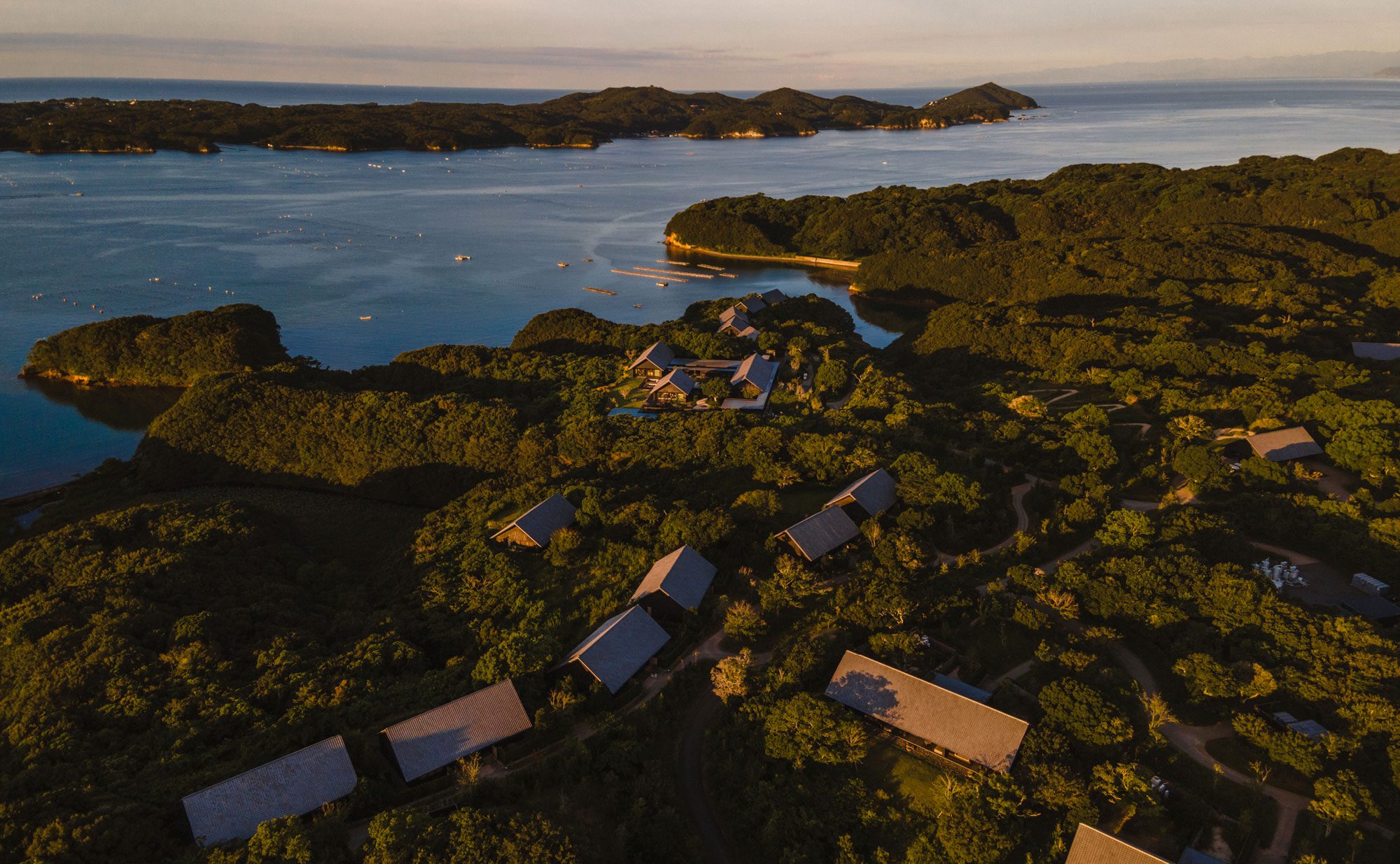
The Ise Peninsula unfolds as a quieter world of forest, coastline, and tradition. Life here follows natural rhythm, shaped by tides, weather, and centuries of cultural continuity.
At Ago Bay, still waters reflect forested hills, while small coastal communities preserve a slower pace of life. The atmosphere is calm, open, and deeply connected to the natural landscape.
A stay at Amanemu or Shima Kanko Hotel The Bay Suites frames this environment through onsen culture and ocean-facing stillness, where architecture blends into land and sea.
At the heart of the region lies Ise Grand Shrine.
One of Japan’s most important spiritual sites, it is experienced through movement rather than spectacle — walking forest paths, crossing wooden bridges, and passing through natural sacred space.
Everything here is defined by simplicity. Silence is not absence, but presence shaped by centuries of ritual continuity.
From the coast, the journey continues to Kyoto.
Kyoto is where Japan’s cultural memory becomes visible. Temples, shrines, and historic streets form a landscape shaped by repetition and preservation rather than change.
At Kiyomizu-dera, wooden terraces open toward seasonal hills. In Gion, narrow lanes preserve older rhythms of life. Along the city’s gardens and riverbanks, tradition continues quietly.
A stay at Hotel Granvia Kyoto or The Thousand Kyoto offers direct access to the city’s historic districts while remaining connected to modern transport and city flow.
The journey then shifts into the mountains.
Yamashiro Onsen offers a slower, more intimate landscape. Hot spring waters rise from beneath forested hills, and the region moves at a gentler, seasonal pace.
Here, ryokan stays define the experience. Tatami rooms, seasonal cuisine, and onsen baths create a rhythm shaped by rest, warmth, and local tradition.
A stay at Beniya Mukayu or Yoshidaya Sannoukaku places the journey deep within the onsen culture of the region, surrounded by mountain air and quiet streets.
The journey returns once more to Tokyo.
The final evening carries a different perspective — the city now seen after silence, coast, and mountains. Its scale feels familiar, but reinterpreted.
Time is often spent revisiting districts, dining, or simply observing the city’s final rhythm before departure.
In the end, this journey is defined by transition.
Not distance.
Between glass and water, city and coast, movement and stillness, Japan reveals itself as a series of layered environments that never fully overlap, yet always connect.
To travel this route is to move through contrast — and gradually understand how each landscape shapes the next.
The Route at a Glance
- Tokyo — 4 nights
- Ise Peninsula — 3 nights
- Kyoto — 3 nights
- Yamashiro Onsen — 2 nights
- Tokyo — 1 night