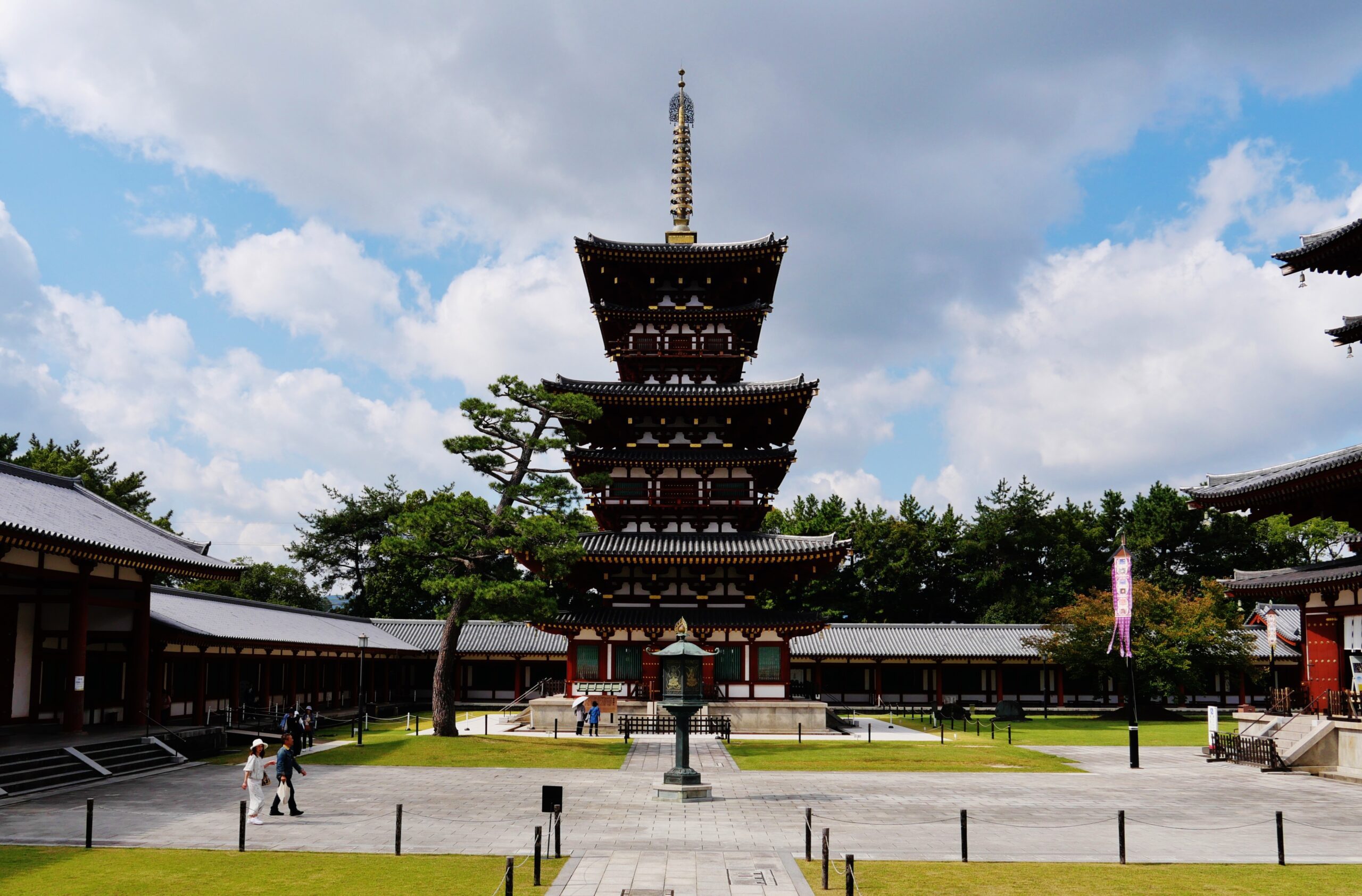
Yakushi-ji Temple, located in Nara, is one of Japan’s oldest and most spiritually significant temples, dedicated to Yakushi Nyorai, the Buddha of healing and medicine. Often called the “Healing Temple,” Yakushi-ji has been a place for centuries where visitors come to pray for health, protection, and restoration. Its serene grounds and ancient architecture make it a deeply calming site for reflection and mindfulness.
History of Yakushi-ji
Yakushi-ji was founded in 680 AD by Emperor Tenmu, initially built as a temple to pray for the emperor’s recovery and wellbeing. Over the centuries, the temple has endured fires, natural disasters, and periods of reconstruction. Despite these challenges, the temple has preserved its sacred legacy and continues to serve as a spiritual haven for worshippers and visitors alike.
- Founded in 680 AD by Emperor Tenmu
- Dedicated to Yakushi Nyorai, the Buddha of Medicine
- UNESCO World Heritage Site
- Rebuilt and restored multiple times over centuries
The Main Hall (Kondō) & East Pagoda
The Main Hall, or Kondō, houses the sacred statue of Yakushi Nyorai, a magnificent representation of healing and compassion. The East Pagoda, one of the most iconic wooden pagodas in Japan, complements the hall, reflecting Nara period craftsmanship and spiritual symbolism.
- Main Hall (Kondō) with the Healing Buddha statue
- East Pagoda — iconic Nara-period wooden architecture
- Symbols of resilience, spiritual protection, and restoration
- Elegant craftsmanship showcasing early Japanese Buddhist design
Together, the Main Hall and East Pagoda represent harmony, balance, and the spiritual strength of Yakushi-ji. They offer visitors a profound sense of connection to Japan’s ancient Buddhist traditions.
Temple Grounds & Gardens
The temple grounds are expansive, tranquil, and designed for slow, intentional walking and reflection. Seasonal changes bring new beauty, creating an immersive experience for visitors:
- Cherry blossoms in spring — soft pink canopies above stone pathways
- Summer greenery — peaceful shade for quiet contemplation
- Autumn maple foliage — vibrant reds and golds surrounding the pagoda
- Winter serenity — calm atmosphere with fewer visitors, ideal for meditation
The gardens incorporate ponds, stone lanterns, and moss-covered walkways, inviting visitors to pause, breathe, and reflect. Every step through Yakushi-ji’s grounds feels intentional and grounding, providing a spiritual rhythm that mirrors the temple’s centuries of practice.
Hidden Gems & Local Experiences
Beyond the main structures, Yakushi-ji offers several hidden features and experiences for visitors seeking a deeper cultural connection:
- Small, quiet meditation gardens tucked behind the East Pagoda
- Stone carvings and inscriptions reflecting prayers for healing
- Local workshops nearby where visitors can learn traditional Nara crafts
- Seasonal festivals, including temple ceremonies celebrating Yakushi Nyorai
Seasonal Highlights & Itineraries
Visiting Yakushi-ji at different times of year transforms the experience dramatically. Each season offers unique aesthetics and cultural insights:
Spring: Cherry Blossoms & Renewal
- Peak cherry blossom season: late March to early April
- Stroll through gardens lined with soft pink blooms
- Combine with nearby Heijō Palace ruins for historical exploration
Summer: Green Tranquility & Local Festivals
- Lush green trees provide shaded walking paths
- Participate in morning meditation sessions organized by temple monks
- Sample local Nara delicacies, including kakinoha sushi and mochi
Autumn: Maple Foliage & Crisp Air
- Late October to early November offers vibrant foliage framing the pagoda
- Photography opportunities of pagodas contrasted with crimson leaves
- Combine with a walk to nearby Toshodai-ji for an extended temple itinerary
Winter: Silent Reflection & Peace
- Snow-dusted grounds enhance the serene atmosphere
- Fewer visitors make for quiet contemplation and personal reflection
- Enjoy slow walks along moss-covered paths, emphasizing mindfulness
Practical Visiting Information
- Best times: Early morning for fewer crowds or late afternoon for soft light
- Duration: 1–1.5 hours for full exploration of main hall, pagodas, and gardens
- Photography: Outdoors allowed; restricted indoors
- Access: Approximately 15 minutes from Nara Station via bus or taxi
- Admission: Modest entry fee supports temple preservation and maintenance
Extended Nara Cultural Day Trip
For visitors seeking a full day of cultural immersion, Yakushi-ji can be combined with nearby temples and attractions:
- Morning: Yakushi-ji exploration, focusing on main hall and East Pagoda
- Midday: Lunch at local eateries featuring Nara specialties
- Afternoon: Visit Toshodai-ji, Kōfuku-ji, and Nara National Museum
- Evening: Stroll in Nara Park feeding deer and enjoying sunset photography
Why Visit Yakushi-ji
Yakushi-ji is more than a temple — it is a sanctuary of healing, reflection, and spiritual restoration. Its ancient architecture, serene grounds, and seasonal beauty provide a deeply calming and contemplative experience. Visitors leave with a renewed sense of balance, insight into Japanese Buddhist traditions, and a lasting impression of tranquility.
Final Thoughts
Visiting Yakushi-ji offers a unique journey into Japan’s spiritual heritage. From the grandeur of the Main Hall and iconic East Pagoda to quiet meditation gardens and seasonal splendor, every aspect encourages mindful exploration and inner reflection. Whether visiting for health, curiosity, or cultural immersion, Yakushi-ji is a timeless destination that heals both body and soul.