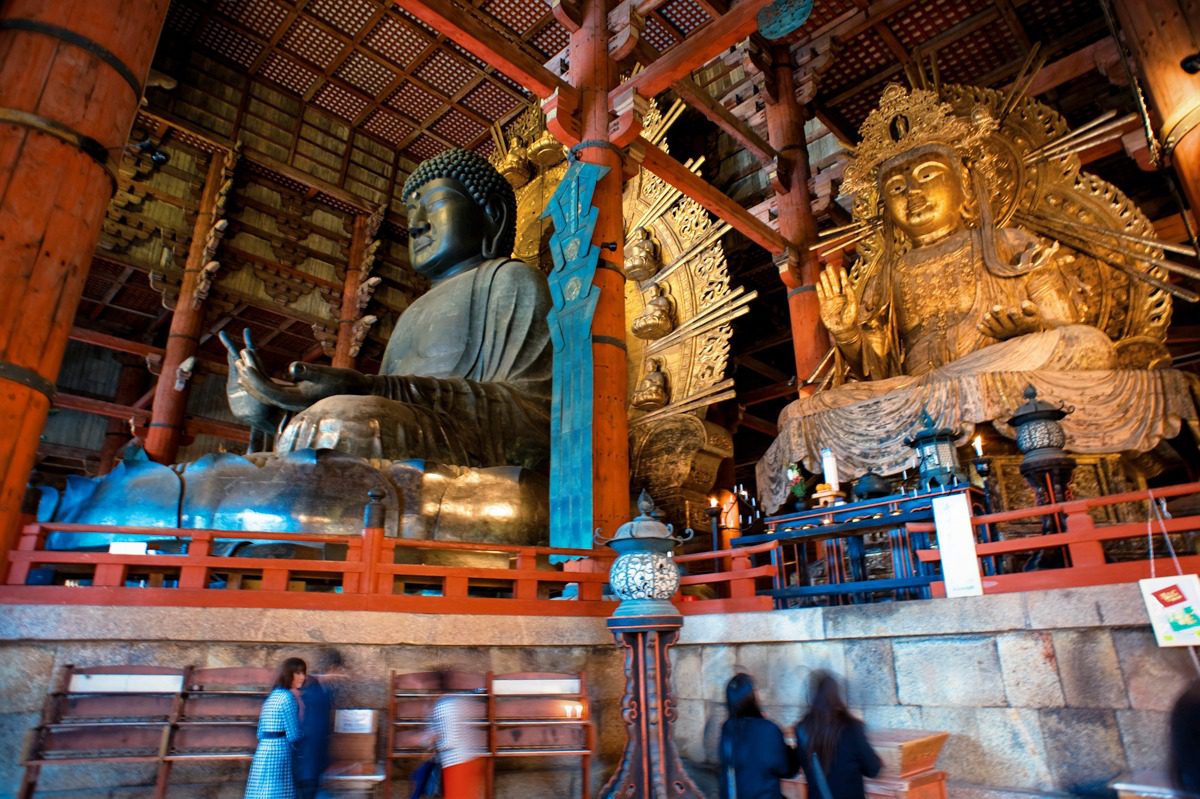
Tōdai-ji Temple, located in the heart of Nara, is one of Japan’s most extraordinary religious landmarks and a must-visit for any cultural traveler. Known worldwide for housing the Great Buddha (Daibutsu), this colossal bronze statue represents over a millennium of spiritual devotion and architectural achievement. Entering the Daibutsuden, visitors are immersed in an atmosphere where scale, silence, and reverence converge — creating a unique experience of both awe and contemplation.
History of Tōdai-ji
Founded in 752 AD under Emperor Shōmu, Tōdai-ji was built to unify Japan under the principles of Buddhism, fostering national peace and spiritual cohesion. The construction required immense resources and labor, highlighting the temple’s national significance. Over centuries, Tōdai-ji has survived numerous fires, earthquakes, and reconstructions, yet its spiritual purpose has remained steadfast. Today, it stands as a UNESCO World Heritage Site and a living monument of faith and history.
- Founded in 752 AD by Emperor Shōmu
- Built to unify Japan through Buddhism and national prayer
- Rebuilt multiple times after disasters
- UNESCO World Heritage Site
The Great Buddha Hall (Daibutsuden)
The Daibutsuden is one of the largest wooden structures in the world, designed to house the Great Buddha of Nara — a massive bronze statue over 15 meters tall. The hall itself exudes monumental scale and architectural precision, leaving visitors awestruck by the harmonious balance between human craftsmanship and spiritual purpose.
- One of the largest wooden buildings in the world
- Houses the Great Buddha (Daibutsu) — over 15 meters tall
- Represents cosmic enlightenment and compassion
- Offers a sensory experience of scale, silence, and reverence
Walking into the hall, the combination of high ceilings, the soft echo of footsteps, and the serene presence of the statue creates an immersive, almost meditative atmosphere. It is a space where architecture, history, and spiritual devotion feel inseparable.
Temple Grounds & Nara Park
Beyond the Daibutsuden, Tōdai-ji’s grounds seamlessly connect with Nara Park, a vast green space home to freely roaming deer — sacred messengers in Shinto tradition. Visitors can interact with the deer (feeding them special deer crackers called “shika senbei”) while enjoying the temple’s scenic surroundings.
- Cherry blossoms in spring, creating ethereal paths
- Lush greenery and shaded walks in summer
- Fiery maple foliage during autumn
- Calm, serene winter landscapes perfect for reflection
- Peaceful walking trails and hidden pagodas within the park
Small, lesser-known shrines and tea houses are scattered throughout the grounds, offering opportunities for quiet reflection and traditional experiences away from the main crowds.
Hidden Gems Near Tōdai-ji
While most visitors focus on the Great Buddha, several hidden features enrich the Tōdai-ji experience:
- Nigatsu-dō Hall: Famous for its beautiful sunset views and panoramic vistas of Nara city
- Small meditation gardens tucked behind temple corridors
- Secret lantern paths that illuminate in evening festivals
- Local souvenir shops with artisanal crafts reflecting Nara’s heritage
Local Experiences Around Tōdai-ji
For deeper cultural immersion, visitors can enjoy:
- Guided tours explaining the temple’s history, architecture, and Buddhist symbolism
- Participating in traditional Buddhist chanting sessions (arranged in advance)
- Sampling local Nara delicacies at nearby eateries — try kakinoha sushi or mochi treats
- Seasonal festivals such as Omizutori in March, where sacred rituals illuminate the temple grounds
Seasonal Highlights & Itineraries
Timing your visit to Tōdai-ji enhances the experience dramatically. Each season offers unique aesthetics and cultural events:
Spring: Cherry Blossoms & Mild Weather
- Peak cherry blossoms: Early to mid-April
- Morning visits recommended to avoid crowds and catch soft light on the wooden hall
- Combine with nearby Isuien Garden for a full spring experience
Summer: Lush Greenery & Festival Vibes
- Green landscapes provide shaded walking paths
- Festivals such as Nara Wakakusa Yamayaki (burning of the hillside) offer cultural immersion
- Afternoon tea or cold matcha treats at local shops
Autumn: Maple Foliage & Golden Light
- Late October to mid-November offers spectacular colors framing the Daibutsuden
- Sunset photography recommended along park trails
- Visit neighboring Kōfuku-ji for a full day of temple-hopping and seasonal beauty
Winter: Serene Silence & Spiritual Reflection
- Snow dusting enhances architectural features of the wooden hall
- Less crowded environment for meditation and reflection
- Combine with an early morning stroll through Nara Park to feed the deer in peace
Practical Visiting Information
- Best times: Early morning or late afternoon for soft lighting and fewer crowds
- Duration: 1.5 to 2 hours to explore the main hall, surrounding gardens, and museum areas
- Photography: Outdoor areas allowed; restricted inside the Daibutsuden
- Access: A 10-minute walk from Kintetsu Nara Station or a short bus ride from JR Nara Station
- Admission: Modest entry fee supports temple maintenance and preservation
Extended Nara Cultural Itinerary
Combine Tōdai-ji with nearby attractions for a full-day immersive cultural experience:
- Morning: Tōdai-ji Daibutsuden and meditation gardens
- Midday: Lunch at local eateries with Nara specialties
- Afternoon: Explore Kōfuku-ji, Kasuga Taisha, and Nara National Museum
- Optional: Evening stroll in Nara Park to feed deer and capture sunset photography
Why Visit Tōdai-ji
Tōdai-ji is more than a temple — it is an immersive journey into Japanese spiritual, cultural, and architectural history. The Great Buddha inspires awe, while the vast wooden hall and surrounding sacred landscape provide space for reflection and contemplation. Whether visiting for the first time or returning to deepen your understanding, Tōdai-ji remains a powerful symbol of faith, resilience, and national heritage.
Final Thoughts
Visiting Tōdai-ji offers a unique combination of scale, history, and spiritual depth. From the awe-inspiring Daibutsu to the seasonal beauty of Nara Park and hidden meditation spots, every element encourages visitors to slow down and experience the profound tranquility of Japan’s ancient capital. For travelers seeking authenticity, beauty, and introspection, Tōdai-ji is not just a destination — it is a lifelong memory.