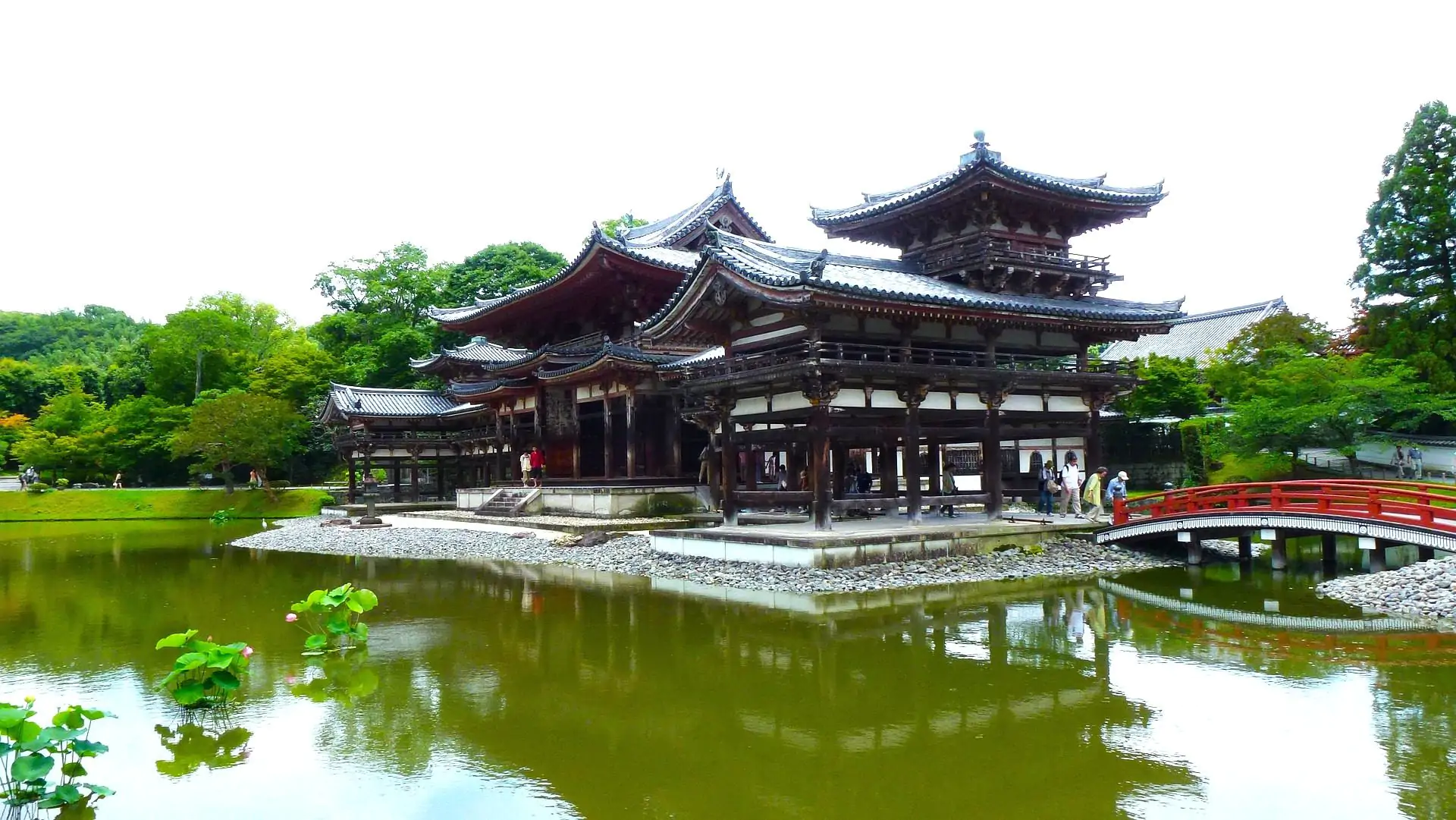
Byōdō-in Temple, located in the serene town of Uji just south of Kyoto, is one of Japan’s most celebrated cultural landmarks. Renowned for its elegant Phoenix Hall, the temple is a masterpiece of Heian-era architecture that has come to symbolize harmony, rebirth, and Pure Land Buddhism. Visitors find themselves immersed in an atmosphere where history, reflection, and natural beauty converge, making it a peaceful retreat from the bustle of nearby Kyoto.
History of Byōdō-in
Byōdō-in was originally constructed in 1052 as a luxurious countryside villa for the powerful Fujiwara family, one of Japan’s most influential noble clans. In the years that followed, the villa was converted into a Buddhist temple dedicated to Pure Land teachings — a sect of Buddhism emphasizing peace, compassion, and rebirth in a paradisiacal realm. This transformation reflected both the spiritual and aesthetic sensibilities of the Heian aristocracy, balancing natural beauty with refined architectural design.
- Founded in 1052 as a noble villa
- Converted into a Buddhist temple during the Heian period
- Dedicated to Pure Land (Jōdo) Buddhist teachings
- UNESCO World Heritage Site, part of the Historic Monuments of Ancient Kyoto
Over centuries, Byōdō-in has survived natural disasters and social upheaval, yet its core structures, especially the Phoenix Hall, remain remarkably preserved. The temple today stands as one of Japan’s finest examples of aristocratic religious architecture, embodying the elegance, refinement, and spiritual vision of the classical period.
The Phoenix Hall (Hōō-dō)
The Phoenix Hall, or Hōō-dō, is the central attraction of Byōdō-in and one of Japan’s most iconic architectural works. Its symmetrical layout, long curved corridors, and central hall evoke the image of a phoenix spreading its wings — a symbol of rebirth and transcendence. Atop the hall, two gilded phoenix statues watch over the temple grounds, creating a striking silhouette against the sky.
- Symmetrical architectural design reflecting the phoenix
- Two golden phoenix statues atop the roof
- Central hall houses the Amida Buddha statue
- Reflection across the pond creates one of Japan’s most photographed scenes
Inside the Phoenix Hall resides a golden statue of Amida Buddha, representing compassion, eternal life, and spiritual protection. To preserve its sacred atmosphere, entry to the hall is restricted to guided visits, allowing visitors to experience the temple’s spiritual depth without disruption. The hall’s combination of woodwork, natural lighting, and spatial harmony exemplifies the refined aesthetic of the Heian period.
Gardens & Sacred Pond
The temple’s surrounding gardens are designed to symbolize the Buddhist vision of paradise. A large central pond mirrors the Phoenix Hall, while stone pathways guide visitors through carefully arranged landscapes of seasonal trees, water features, and ornamental stones. This approach to garden design emphasizes slow, deliberate movement, encouraging meditation, reflection, and an appreciation for natural balance.
- Central pond reflects the Phoenix Hall
- Stone paths guide contemplative walks
- Seasonal trees highlight spring blossoms and autumn colors
- Simple, refined landscaping emphasizes peace and balance
Throughout the year, the gardens transform: cherry blossoms in spring frame the Phoenix Hall in soft pink hues, while fiery maple leaves in autumn create striking contrasts against the reflective water. Even in winter, the temple’s calm grounds blanketed in snow evoke an atmosphere of stillness and spiritual reflection.
Hōshōkan Museum
The on-site Hōshōkan Museum complements the temple experience by providing visitors with a deeper understanding of Byōdō-in’s history, architecture, and artistry. Exhibits include ancient Buddhist artifacts, miniature architectural models, and historical documents. While compact, the museum contextualizes the temple’s cultural and spiritual significance, enriching the visitor experience and offering educational insight into Heian-era Japan.
- Displays of ancient Buddhist artifacts and sculptures
- Architectural models demonstrating temple design
- Historical documents and cultural context of the Heian period
- Interactive exhibits for educational and cultural understanding
Seasonal Highlights
Byōdō-in offers unique experiences throughout the year, with seasonal changes enhancing its aesthetic and spiritual appeal:
Spring: Cherry Blossom Reflections
- Late March to April: cherry blossoms bloom around the temple pond
- Soft morning light enhances the reflection of Phoenix Hall
- Ideal time for outdoor photography and contemplative walks
Summer: Green Serenity
- Lush greenery along garden paths creates a tranquil environment
- Shaded areas provide a respite from Kyoto’s summer heat
- Combination of water features and natural flora encourages meditation
Autumn: Crimson and Gold
- Late October to early November: maple leaves transform gardens into a palette of reds and golds
- Perfect contrast with the wooden Phoenix Hall and reflective pond
- Early morning visits provide quiet contemplation and excellent photography lighting
Winter: Silent Reflection
- January to February: serene snow-covered gardens
- Reflection in icy pond surfaces evokes stillness and calm
- Minimal tourist crowds create a meditative atmosphere
Visiting Information
- Best season: Spring and Autumn for natural beauty and light
- Duration: 1 to 1.5 hours including temple, pond, and museum
- Photography: Allowed outdoors; limited indoors for sacred spaces
- Access: 10 minutes by bus from Uji Station
- Admission: Modest fee supports temple preservation
Extended Uji Cultural Itinerary
Byōdō-in is easily combined with other cultural experiences in Uji for a full-day itinerary:
- Morning: Visit Byōdō-in Temple and explore the Phoenix Hall and gardens
- Midday: Stroll along Uji River and enjoy traditional Japanese tea at local shops
- Afternoon: Visit Ujigami Shrine, Japan’s oldest Shinto shrine
- Evening: Explore historic streets and sample local Uji matcha delicacies
Why Visit Byōdō-in
Byōdō-in is more than a temple — it is a vision of paradise materialized in wood, water, and carefully designed space. The Phoenix Hall, reflective pond, and serene gardens encourage visitors to slow down, reflect, and absorb the temple’s spiritual energy. Its combination of Heian-period artistry, Buddhist philosophy, and natural beauty makes it an essential stop for anyone exploring Kyoto or Uji.
Final Thoughts
For travelers seeking a blend of cultural, spiritual, and visual experiences, Byōdō-in Temple offers a peaceful yet profound journey into Japan’s past. From the gilded Amida Buddha inside Phoenix Hall to the quiet seasonal gardens and reflective pond, every element is designed to inspire contemplation, serenity, and awe. Visitors leave with lasting impressions of harmony, beauty, and spiritual connection.