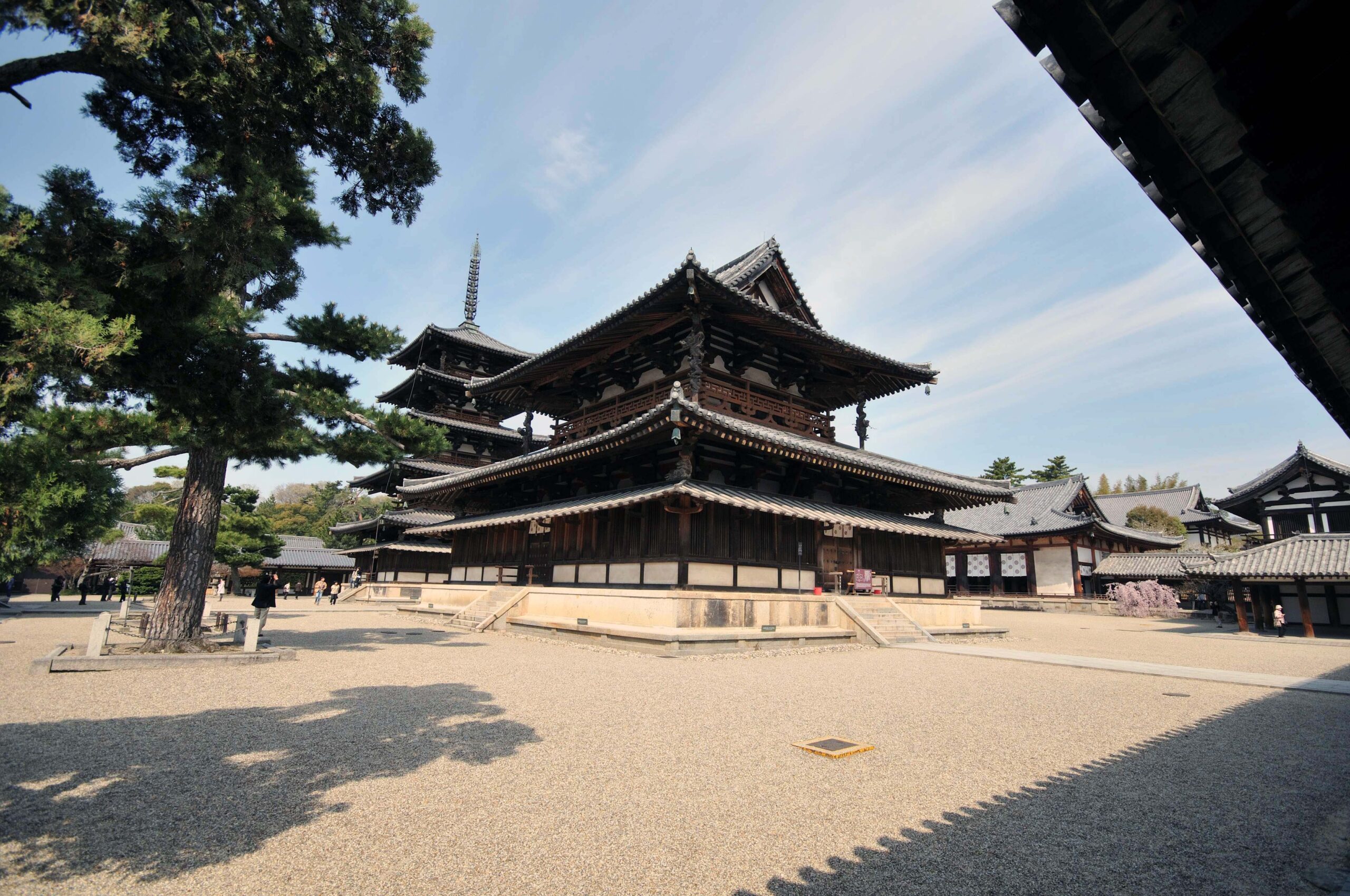
Located in the peaceful town of Ikaruga in Nara Prefecture, Hōryū-ji Temple stands as one of Japan’s most remarkable historical and cultural landmarks. Revered as one of the oldest surviving wooden temple complexes in the world, it represents a direct connection to the earliest days of Buddhism in Japan and offers visitors a rare opportunity to step into the architectural and spiritual world of ancient Japan. Designated as a UNESCO World Heritage Site, Hōryū-ji is not merely an important temple — it is a living testament to Japan’s artistic, religious, and architectural evolution over more than thirteen centuries.
Walking through the temple grounds evokes a profound sense of historical continuity. The weathered wooden beams, spacious courtyards, and carefully preserved halls reflect centuries of devotion and craftsmanship. Unlike some of Japan’s more crowded religious landmarks, Hōryū-ji retains an atmosphere of calm contemplation, allowing visitors to absorb both its spiritual significance and extraordinary historical presence. For those seeking to understand Japan’s cultural foundations, few destinations offer a more meaningful journey into the nation’s ancient past.
History of Hōryū-ji Temple
Hōryū-ji was founded in 607 AD by Prince Shōtoku, one of the most influential figures in Japanese history and a central force behind the introduction and promotion of Buddhism throughout Japan. Prince Shōtoku viewed Buddhism as both a spiritual philosophy and a unifying cultural force, helping to establish its presence within Japanese society during a transformative era of political and religious development.
- Founded in 607 AD by Prince Shōtoku
- Built to promote Buddhist teachings throughout Japan
- One of the oldest surviving wooden temple complexes in the world
- Designated a UNESCO World Heritage Site in 1993
Although parts of the temple complex were destroyed by fire in 670 AD, reconstruction efforts carefully preserved its original layout and design principles. Much of what visitors see today dates back to the late 7th and early 8th centuries, making Hōryū-ji’s structures among the oldest surviving wooden buildings on Earth. This remarkable preservation offers an unparalleled glimpse into early Japanese architecture and religious practice.
Architectural Significance
Hōryū-ji is internationally renowned for its architectural importance. The temple complex represents one of the earliest and most complete examples of Buddhist temple design in Japan, blending continental influences from China and Korea with distinctly Japanese adaptations.
- Among the world’s oldest surviving wooden structures
- Combines Chinese, Korean, and Japanese architectural elements
- Preserves original Asuka-period design principles
- Influenced centuries of Japanese temple construction
The use of interlocking wooden joints without nails reflects the extraordinary skill of ancient craftsmen. These techniques ensured durability while maintaining elegance and balance.
The Western Precinct (Sai-in)
The Western Precinct is the heart of Hōryū-ji and contains some of the temple’s most historically significant structures. Its layout offers visitors a direct encounter with Japan’s earliest temple architecture.
- Home to the Five-Story Pagoda
- Contains the Golden Hall (Kondō)
- Features one of Japan’s oldest temple layouts
- Recognized as a masterpiece of early Buddhist architecture
The Five-Story Pagoda
The Five-Story Pagoda is one of Hōryū-ji’s most iconic structures. Rising gracefully above the temple grounds, it symbolizes Buddhist cosmology and demonstrates advanced engineering techniques from over thirteen centuries ago.
- Constructed in the late 7th century
- Represents Buddhist cosmological principles
- Contains sacred relics within its central pillar
- Among Japan’s oldest surviving pagodas
The Golden Hall (Kondō)
Adjacent to the pagoda stands the Golden Hall, home to ancient Buddhist statues and priceless artistic treasures reflecting early cultural exchanges with mainland Asia.
- Houses historic Buddhist sculptures
- Features early Buddhist iconography
- Preserves continental artistic influences
- Serves as a sacred worship space
The Eastern Precinct (Tō-in)
The Eastern Precinct offers a quieter and more reflective experience, centered around the Yumedono, or Hall of Dreams, which is closely associated with Prince Shōtoku.
- More peaceful and less crowded
- Centered around the Yumedono
- Connected to Prince Shōtoku’s legacy
- Ideal for quiet contemplation
Yumedono (Hall of Dreams)
The octagonal Yumedono is one of Hōryū-ji’s most distinctive structures, built to honor Prince Shōtoku and representing enlightenment and spiritual reflection.
- Unique octagonal architecture
- Built in memory of Prince Shōtoku
- Houses sacred Buddhist imagery
- Symbolizes spiritual awakening
Artistic and Cultural Treasures
Hōryū-ji contains an extraordinary collection of Buddhist art and historical artifacts, many dating back more than a millennium.
- Ancient Buddhist statues
- Rare Asuka-period artifacts
- Historic manuscripts
- Ceremonial objects of national importance
The temple’s treasure house offers valuable insight into Japan’s artistic and spiritual development during its formative centuries.
Seasonal Highlights
Hōryū-ji offers a unique atmosphere in every season.
Spring: Blossoms and Renewal
- Cherry blossoms frame ancient buildings
- Mild weather ideal for exploring
- Excellent photography opportunities
Summer: Green Serenity
- Lush greenery surrounds the temple
- Quiet shaded pathways
- Peaceful contemplative atmosphere
Autumn: Crimson Beauty
- Maple leaves create dramatic contrasts
- Cool temperatures for comfortable visits
- Stunning natural scenery
Winter: Silent Reflection
- Minimal tourist crowds
- Crisp peaceful surroundings
- Occasional snow enhances the ancient setting
Visiting Information
- Best season: Spring and autumn
- Duration: 1.5 to 2 hours
- Photography: Allowed outdoors, restricted indoors
- Access: Approximately 20-minute walk from JR Hōryū-ji Station
- Admission: Modest preservation fee
Extended Ikaruga Cultural Itinerary
A visit to Hōryū-ji pairs well with nearby historical sites for a full cultural day trip.
- Morning: Explore Hōryū-ji Temple
- Midday: Traditional lunch in Ikaruga
- Afternoon: Visit Chūgū-ji Temple
- Late afternoon: Explore Hokkiji Temple
Why Visit Hōryū-ji Temple
Hōryū-ji is more than a temple — it is one of the world’s oldest surviving wooden architectural treasures and a profound symbol of Japan’s spiritual and cultural origins.
Its peaceful atmosphere, extraordinary craftsmanship, and historical depth make it essential for anyone interested in Japanese history, Buddhism, and timeless design.
Final Thoughts
For travelers seeking an authentic journey into Japan’s ancient past, Hōryū-ji Temple offers an experience of remarkable depth and meaning. Its weathered wooden halls, sacred spaces, and serene courtyards preserve over thirteen centuries of spiritual devotion and artistic excellence.
Whether admired for its architectural brilliance or experienced as a place of reflection, Hōryū-ji leaves visitors with a lasting appreciation for Japan’s enduring cultural legacy.