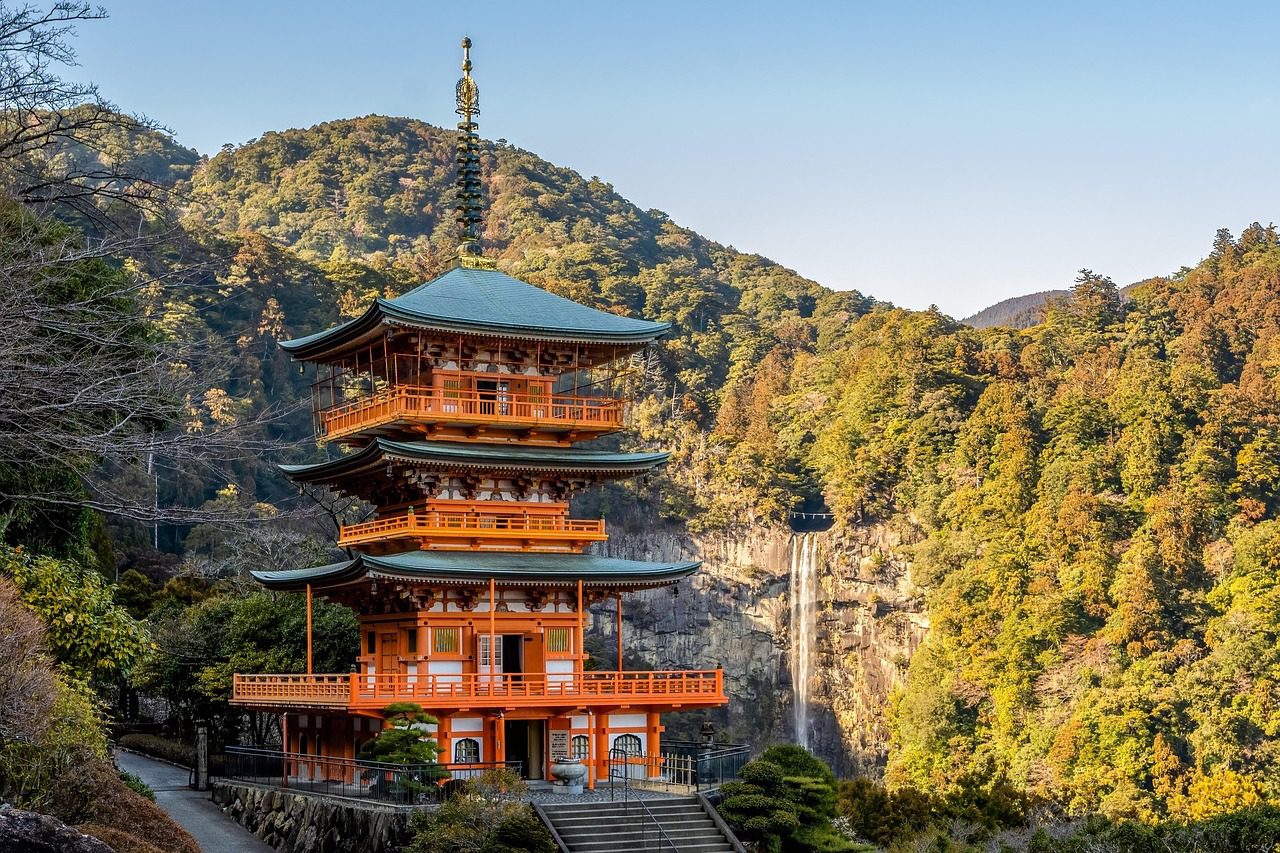
Step onto the Kumano Kodo, a network of ancient pilgrimage trails across Japan’s Kii Peninsula, where history, nature, and spirituality are inseparably intertwined. Recognised as a UNESCO World Heritage site, these sacred paths have been walked for over a thousand years by emperors, monks, and pilgrims seeking purification and enlightenment.
The trails lead through mist-covered mountains, ancient cedar forests, and remote villages that have preserved their traditions for centuries. At its heart lie the three Kumano Grand Shrines: Kumano Hongu Taisha, Kumano Hayatama Taisha, and Kumano Nachi Taisha.
Why Walk the Kumano Kodo
More than a hiking route, the Kumano Kodo is a spiritual passage through Japan’s sacred landscape. Every step reflects centuries of pilgrimage tradition and devotion to nature:
- Moss-covered stone paths and ancient torii gates
- Sacred shrines and rural villages
- Peaceful streams and waterfalls
- Centuries-old pilgrimage routes still in use today
A journey not measured in distance, but in reflection — where silence becomes the guide.
The Three Grand Shrines
- Kumano Hongu Taisha — spiritual heart of renewal and rebirth.
- Kumano Hayatama Taisha — riverside sanctuary of purification.
- Kumano Nachi Taisha — sacred shrine overlooking the powerful Nachi Falls.
Top Experiences Along the Trail
Pilgrimage Routes
- Nakahechi Route — classic imperial pilgrimage path
- Kohechi Route — mountain crossing through the Kii range
- Ohechi Route — coastal pilgrimage route
Sacred Landscapes
- Nachi Falls — 133-meter sacred waterfall
- Onsen towns — traditional hot spring retreats
Cultural Encounters
- Shojin ryori — Buddhist vegetarian cuisine
- Local artisan crafts
- Seasonal pilgrimage rituals
Seasonal Experience
- Spring — cherry blossoms and renewal
- Summer — deep forest shade and rivers
- Autumn — red and gold mountain landscapes
- Winter — silent snow-covered trails
Practical Tips for Visitors
- Wear sturdy walking shoes; trails can be uneven and steep.
- Check weather and seasonal trail conditions, especially in winter.
- Book accommodations in advance if planning overnight stays along Nakahechi or Kohechi routes.
- Consider a guided tour for historical context and spiritual insight.
- Carry cash; many small inns and shrines do not accept cards.
Why Kumano Kodo is Unique
The Kumano Kodo offers more than scenic landscapes — it is a living pilgrimage through time. Few trails in the world provide such an intertwined experience of history, spirituality, and natural beauty.
Walking these paths allows for reflection, quiet observation, and a deeper connection with Japan’s spiritual heritage.
Journey Summary
The Kumano Kodo is not simply a hiking route — it is a sacred passage through Japan’s history, mountains, and culture. Each step leads inward as much as forward, making it a profound experience for both the body and spirit.
Whether walking the Nakahechi route or exploring coastal Ohechi, travelers will find moments of stillness, awe-inspiring scenery, and an intimate connection to Japan’s spiritual heart.