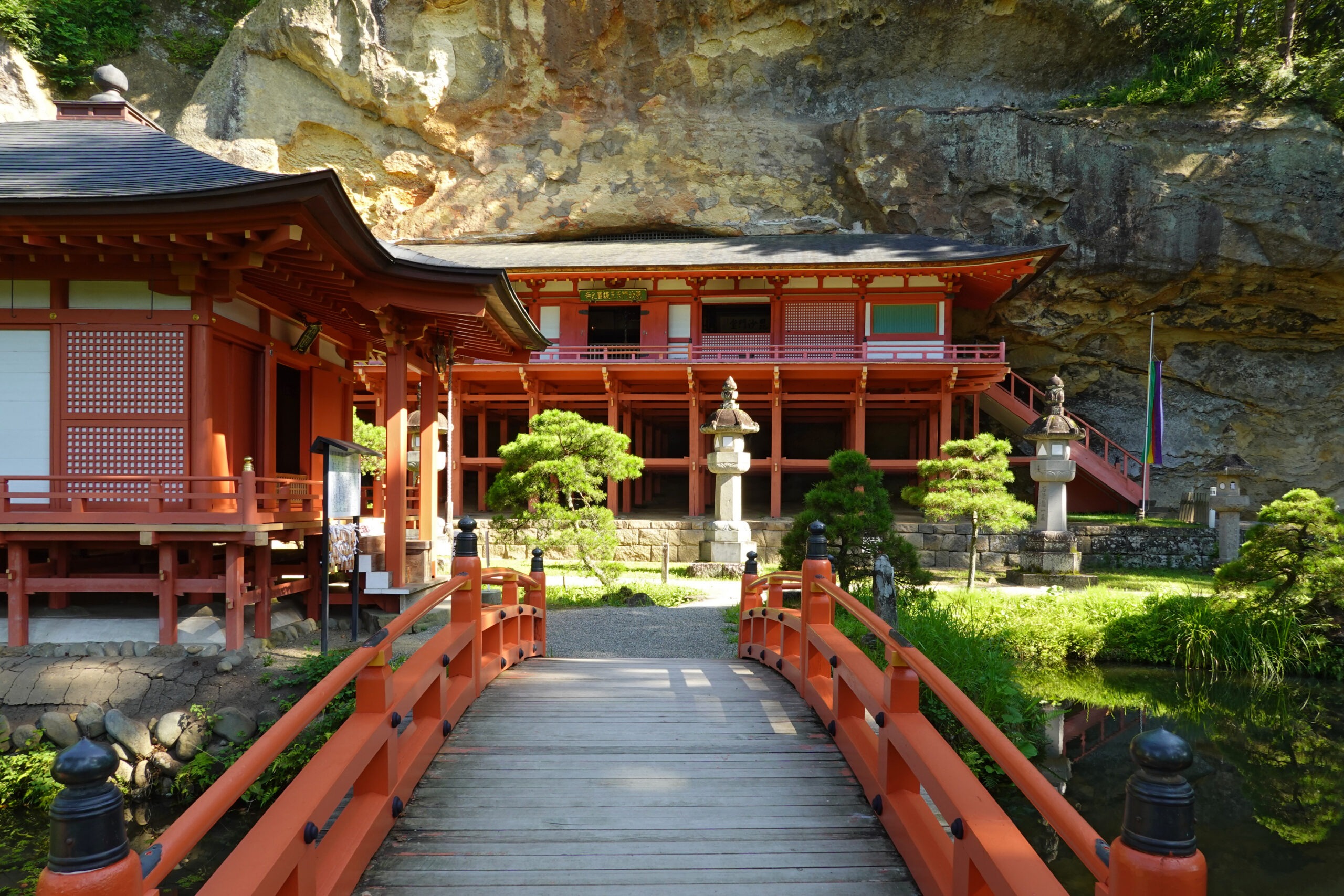
Takkoku no Iwaya, also known as the “Temple of the Rock Cave,” is one of Japan’s most dramatic and visually striking sacred sites. Carved directly into a towering cliffside in Hiraizumi, Iwate Prefecture, it fuses natural geology with spiritual architecture in a way found nowhere else in Japan. Founded in 801 AD by the legendary military commander Sakanoue no Tamuramaro, it stands as a testament to devotion, protection, and the unique harmony of nature and faith. Visitors encounter a site where stone, spirit, and silence converge, offering an experience both contemplative and awe-inspiring.
History of Takkoku no Iwaya
The origins of Takkoku no Iwaya are closely tied to the military and spiritual history of northern Japan. Sakanoue no Tamuramaro, a famed general and devout Buddhist, carved the temple into the cliff to honor Bishamonten, the deity of warriors and protector of the land. Over more than twelve centuries, the temple has withstood earthquakes, harsh winters, and weathering, yet continues to radiate the spiritual energy of its founder.
- Founded in 801 AD by Sakanoue no Tamuramaro
- Dedicated to Bishamonten, protector of warriors
- Endured centuries of natural erosion
- Recognized as an important cultural site in Hiraizumi
The Cliffside Temple Experience
Unlike conventional temple complexes, Takkoku no Iwaya is carved directly into a vertical rock face. Visitors approach along quiet forest paths before encountering the cave entrance, where the interplay of shadow and stone enhances the sacred atmosphere. Inside, a carved statue of Bishamonten presides, and the faint echo of footsteps emphasizes the timelessness of the space.
- Carved directly into a natural cliff
- Houses a cave shrine with a statue of Bishamonten
- Blends sacred architecture and geology
- Provides a powerful, dramatic atmosphere for contemplation
Surrounding Landscape and Hidden Gems
The temple is surrounded by serene forest paths and smaller auxiliary shrines. Exploring these areas gives visitors a chance to engage with the quiet spirituality of northern Japan, away from the bustling tourist spots of Kyoto or Tokyo.
- Moss-covered walking trails leading to the temple
- Small Shinto shrines dotted along the cliff base
- Natural viewpoints for photographing the cliff and surrounding forest
- Seasonal flora enhancing the atmosphere — cherry blossoms in spring, fiery maple leaves in autumn
Seasonal Highlights at Takkoku no Iwaya
Spring: Cherry Blossoms and Gentle Renewal
- March–May: Cherry blossoms bloom along forest paths and near the cliff entrance
- Early mornings provide peaceful conditions for meditation or photography
- Combine with a stroll in Hiraizumi’s Motsu-ji Garden for a full spring experience
Summer: Lush Green Serenity
- June–August: Forest paths are rich with greenery and moss, creating a tranquil backdrop for the temple
- Cooler temperatures along the cliff make summer visits refreshing
- Listen for birdsong and the gentle sound of nearby streams
Autumn: Fire and Reflection
- October–November: Vibrant red, orange, and yellow leaves surround the cliff, creating a striking natural contrast to the dark stone temple
- Perfect for photography, especially in late afternoon light
- Combine with visits to Chuson-ji and Motsu-ji temples to enjoy the full cultural and autumnal richness of Hiraizumi
Winter: Silence and Contemplation
- December–February: The area is quiet and often snow-dusted, emphasizing the stark beauty of the rock-carved temple
- Limited crowds make winter visits ideal for personal reflection or guided meditation sessions
- Nearby teahouses offer warming local dishes and matcha for visitors
Local Experiences Around Takkoku no Iwaya
Hiraizumi is rich with hidden experiences for travelers who wish to go beyond the temple visit:
- Guided tours explaining the historical significance of Sakanoue no Tamuramaro and the rise of the Northern Fujiwara clan
- Hands-on workshops for traditional crafts such as weaving or Buddhist talisman making
- Local ryokan accommodations offering seasonal kaiseki dinners and natural hot springs
- Walking tours combining Takkoku no Iwaya with Chuson-ji and Motsu-ji, UNESCO World Heritage sites nearby
Practical Information for Visiting
- Access: Approximately 10 minutes by bus or taxi from Hiraizumi Station
- Visiting Time: 45–60 minutes recommended for a full exploration
- Photography: Outdoor photography allowed, limited indoor photography in the cave shrine
- Admission: Small fee may apply to help maintain the site
- Nearby Amenities: Cafés, souvenir shops, and local cultural centers in Hiraizumi town
Extended Itinerary Suggestions
For travelers who want to explore northern Japan in depth:
- Visit Chuson-ji Temple for the Golden Hall (Konjikidō) and other UNESCO-listed structures
- Motsu-ji Temple gardens — a Pure Land garden experience reflecting Buddhist ideals of paradise
- Hiraizumi Historical Museum for context on the Northern Fujiwara clan
- Day hikes along Mount Kinkei for panoramic views of Hiraizumi and surrounding landscapes
Why Visit Takkoku no Iwaya
Takkoku no Iwaya is more than a temple — it is a dialogue between stone, spirit, and time. Carved into a cliff over 1,200 years ago, it merges Japan’s warrior history, esoteric Buddhism, and natural beauty into a singular experience. Visitors leave with a deep sense of connection to both the land and the enduring spiritual legacy of Hiraizumi.
Final Thoughts
Whether you are a photographer, history enthusiast, spiritual seeker, or traveler pursuing cultural immersion, Takkoku no Iwaya provides an unforgettable experience. Its cliffside shrine, seasonal landscapes, and hidden forest paths create an atmosphere of contemplation and awe. Experiencing Takkoku no Iwaya is like stepping outside of ordinary time — into a sacred space where the natural world and human devotion are perfectly intertwined.