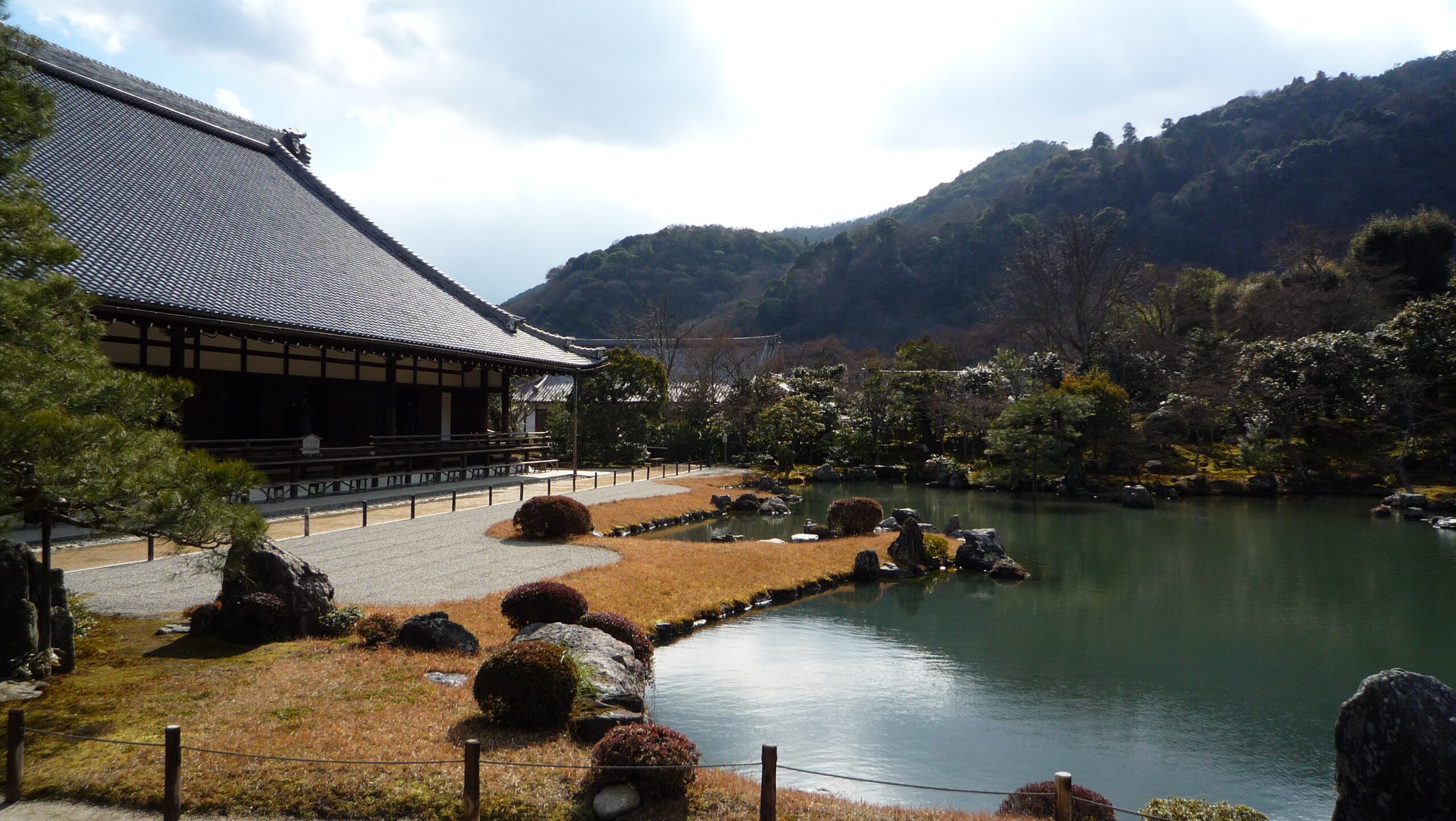
Tenryū-ji Temple, known as the “Heavenly Dragon Temple,” is one of Kyoto’s most celebrated Zen temples and a masterpiece of landscape design. Located in the scenic Arashiyama district, Tenryū-ji combines spiritual philosophy, natural beauty, and centuries of cultural refinement into a serene experience. As a UNESCO World Heritage Site, it is recognized for its outstanding Zen gardens, historic architecture, and harmonious integration with the surrounding mountains and forests. Visitors can experience the temple’s timeless sense of calm while exploring its garden, corridors, and hidden corners that reveal Kyoto’s spiritual and cultural soul.
History of Tenryū-ji
Founded in 1339 by shogun Ashikaga Takauji, Tenryū-ji was built to honor Emperor Go-Daigo and restore spiritual balance after a period of political conflict. The temple became a central site for Rinzai Zen Buddhism and has served as a place of meditation, study, and reflection for centuries. Although fires and natural disasters have destroyed portions of the complex over time, the gardens and core temple structures have been carefully preserved and restored, maintaining the original Zen aesthetic and philosophical principles.
- Founded in 1339 by shogun Ashikaga Takauji
- UNESCO World Heritage Site as part of Kyoto’s Historic Monuments
- Dedicated to Emperor Go-Daigo
- Central temple of Rinzai Zen Buddhism
The Sōgenchi Garden: A Living Zen Masterpiece
The Sōgenchi Garden is the heart of Tenryū-ji and one of Japan’s most revered Zen gardens. Designed by the master landscape architect Musō Soseki, it exemplifies the Zen principles of balance, simplicity, and reflection. The garden’s design is intended to be appreciated from the temple halls, offering a framed view that evolves with the seasons.
- Pond-centered design symbolizing natural harmony
- Stone arrangements representing mountains and flowing water
- Moss gardens reflecting simplicity, stillness, and impermanence
- Integration with surrounding Arashiyama mountains and bamboo groves
Temple Grounds and Surrounding Areas
Beyond the Sōgenchi Garden, Tenryū-ji’s grounds extend into forested pathways, serene corridors, and wooden halls that encourage contemplative walking. The temple’s location in Arashiyama allows visitors to enjoy natural landscapes that change dramatically with the seasons, enhancing the Zen experience.
- Cherry blossoms in spring creating soft, pink tranquility
- Vivid autumn maple foliage illuminating the gardens
- Bamboo groves nearby providing a peaceful, shaded walk
- Riverside views and mountain backdrops integrating nature and architecture
Hidden Gems Near Tenryū-ji
Arashiyama Bamboo Grove
Just a short walk from the temple, the bamboo grove is a serene, almost mystical corridor of towering bamboo stalks. Early mornings are ideal for avoiding crowds and enjoying the whispering sound of the wind through the bamboo.
Okochi Sanso Villa
A private villa with stunning gardens, tea houses, and panoramic views of Kyoto. Visitors can enjoy matcha tea while admiring the meticulous landscaping, offering a more exclusive and quiet experience compared to the main temple grounds.
Hogonin Temple
A lesser-known temple in the Arashiyama area with beautiful moss gardens and seasonal flowers. Ideal for travelers seeking a more intimate Zen experience away from the main tourist paths.
Seasonal Itineraries
Spring: Cherry Blossom Serenity
- Late March to early April: Visit Tenryū-ji and surrounding Arashiyama for full cherry blossom bloom
- Guided hanami tours with private tea sessions in the temple gardens
- Combine with a walk along the Katsura River for riverside cherry views
Summer: Zen in Lush Greenery
- June to August: Explore moss-covered paths, shaded bamboo groves, and mountain trails
- Seasonal festivals in Arashiyama for cultural immersion
- Evening illumination events highlighting temple architecture
Autumn: Golden Maple Retreat
- October–November: Experience vibrant autumn leaves framing the Sōgenchi Garden
- Private guided photography tours to capture autumn reflections in the pond
- Tea ceremony experiences in temple halls amidst colorful foliage
Winter: Quiet Contemplation
- December–February: Minimal crowds create peaceful meditation opportunities
- Frosted moss and bare bamboo provide a stark but beautiful contrast
- Combine with a riverside stroll and nearby onsen for warmth and reflection
Local Experiences Around Tenryū-ji
- Traditional kimono rentals for temple and bamboo grove walks
- Zen meditation and calligraphy workshops in nearby centers
- Boat rides along the Katsura River for scenic perspectives of the temple and mountains
- Private guided tours highlighting historical and spiritual insights
Food and Refreshments in Arashiyama
The Arashiyama area surrounding Tenryū-ji offers a variety of local culinary experiences that complement a day of cultural exploration:
- Matcha tea houses with traditional wagashi sweets
- Seasonal tofu and yudofu (hot pot) restaurants near the temple
- Riverfront cafés serving local pastries and Japanese teas
- Street vendors offering skewered snacks and fresh mochi
Practical Details for Visiting Tenryū-ji
- Access: 10-minute walk from Arashiyama Station (JR and Keifuku lines)
- Opening Hours: 8:30 AM – 5:30 PM (varies seasonally)
- Admission: ¥500–¥1,000 depending on garden access
- Photography: Allowed outdoors, indoor spaces restricted
- Nearby Attractions: Bamboo Grove, Okochi Sanso Villa, Togetsukyo Bridge
Why Tenryū-ji Should Be on Your Kyoto Itinerary
Tenryū-ji is more than a temple — it is a holistic Zen experience that combines architecture, gardens, and spiritual philosophy. Its harmonious design allows visitors to feel a sense of balance and calm, while the surrounding Arashiyama area provides cultural, culinary, and natural experiences that enrich the visit. For anyone seeking Kyoto’s true Zen essence, Tenryū-ji is an indispensable destination.
Final Thoughts
Visiting Tenryū-ji Temple offers a rare glimpse into Japan’s deep spiritual heritage and the artistry of Zen garden design. From its mossy paths and seasonal beauty to hidden gems and cultural experiences, Tenryū-ji allows travelers to slow down, reflect, and connect with the timeless principles of Zen. Every step, stone, and tree is an invitation to mindfulness, making it a must-visit destination for anyone exploring Kyoto.