Japan is home to some of the most extraordinary festivals in the world, where ancient rituals, playful traditions, and deeply rooted spirituality come together in celebrations that often feel unlike anything found elsewhere. From high-energy events that test physical endurance to symbolic ceremonies steeped in centuries of meaning, these festivals reveal a side of Japan that is both surprising and profoundly cultural.
While many travellers are familiar with Japan’s cherry blossom season or tranquil temple visits, its festival culture offers something far more immersive. Locals actively participate in events that blur the line between sacred ritual and communal celebration, often inviting visitors to witness — and sometimes join — experiences that have been passed down for generations.
Hadaka Matsuri (裸祭り) — The Naked Festival
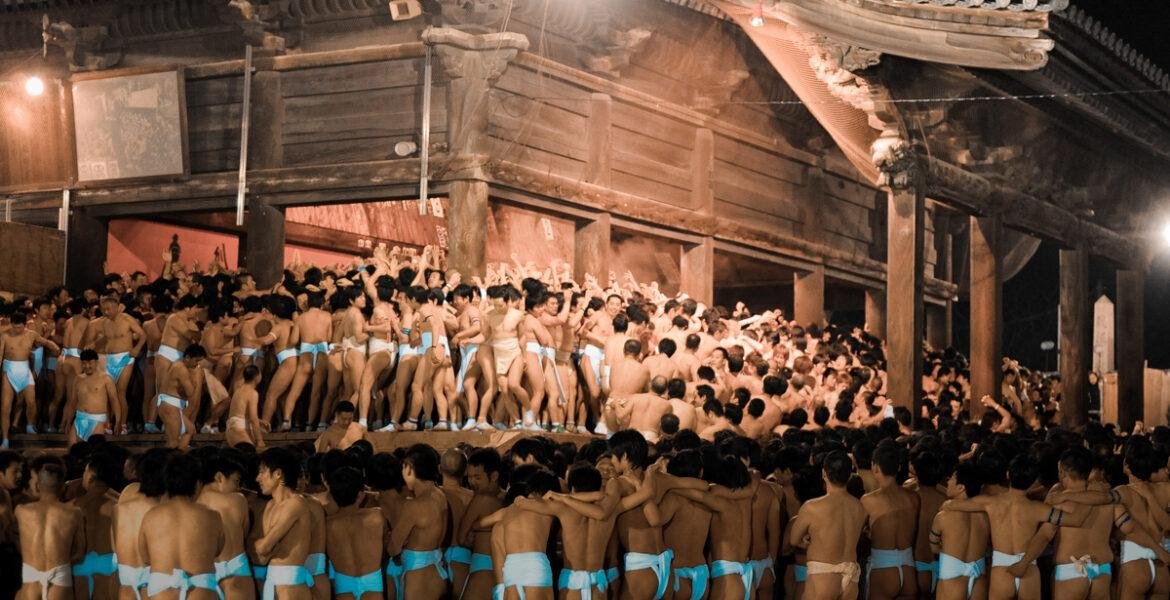
The Hadaka Matsuri, often translated as the “Naked Festival,” is one of Japan’s most physically intense and visually striking traditional events. Despite its name, participants are not fully naked. Instead, they wear minimal clothing, typically a fundoshi (traditional loincloth) and sometimes a light robe, depending on the region and weather conditions.
The most famous version is held at Saidaiji Kannon-in Temple in Okayama, where thousands of men gather in a powerful display of endurance, faith, and community spirit. The central ritual involves trying to catch sacred wooden sticks called shingi or go-ō, which are thrown into the crowd by priests. It is believed that the individuals who successfully secure these objects will be blessed with a year of good fortune.
The atmosphere is intense — dimly lit temple grounds, chanting crowds, and a charged sense of anticipation create an almost electric environment. Cold winter air adds to the challenge, making the physical endurance aspect even more significant. Yet despite the chaos, the festival is deeply rooted in purification rituals and spiritual renewal.
A festival where hardship becomes blessing, and struggle is transformed into spiritual reward.
Kanamara Matsuri — The Festival of Steel
Among Japan’s most internationally recognised and unusual celebrations is Kanamara Matsuri, held annually in Kawasaki. Often referred to as the “Festival of Steel,” this event is dedicated to themes of fertility, marital harmony, and protection from disease.
At its heart lies the Kanayama Shrine, where the festival originated from ancient beliefs of protection against illness and misfortune. Over time, it evolved into a vibrant and playful public celebration featuring colourful parades, elaborate floats, and symbolic imagery that has become widely recognised around the world.
One of the most distinctive aspects of Kanamara Matsuri is its parade of themed mikoshi (portable shrines), often carved or decorated in exaggerated forms. These are carried through the streets by participants dressed in traditional attire, accompanied by musicians, dancers, and festival vendors.
Beyond its humorous appearance, the festival also carries serious cultural meaning. Historically, it was associated with prayers for safe childbirth, protection from illness, and fertility blessings. Today, it blends humour and tradition in a way that reflects Japan’s ability to reinterpret ancient beliefs for modern audiences.
Onbashira Festival — Riding the Sacred Logs
The Onbashira Festival is one of Japan’s most dangerous and awe-inspiring traditional events, held once every six years in the Suwa region of Nagano Prefecture. Its name means “honourable pillars,” referring to the massive tree trunks that are cut from the mountains and transported to shrines as part of a ritual renewal.
The festival is divided into two main phases: Yamadashi (mountain descent) and Satobiki (installation). During Yamadashi, participants ride enormous logs down steep forest slopes in an adrenaline-filled descent that is both physically demanding and extremely risky.
Despite modern safety improvements, the tradition remains deliberately challenging, preserving its historical authenticity. The logs are later erected at the corners of the Suwa Taisha shrines, symbolising renewal, spiritual strength, and the continuation of divine protection.
Spectators gather in large numbers to witness this rare event, which has been described as both a celebration of courage and a direct connection to Japan’s ancient relationship with nature and Shinto belief systems.
Why These Festivals Are So Unique
What makes Japan’s festivals particularly remarkable is not only their visual spectacle, but the depth of meaning embedded within them. Unlike many modern celebrations that focus primarily on entertainment, these events often combine spirituality, local identity, historical continuity, and community participation in a single experience.
Some festivals emphasise purification and endurance, while others embrace humour, symbolism, or ritualised chaos. Together, they reflect the diversity of Japan’s cultural landscape — from rural mountain villages to densely populated urban centres.
- Spiritual depth — Many festivals are rooted in Shinto or Buddhist traditions
- Community involvement — Locals actively participate, not just observe
- Historical continuity — Traditions often span hundreds of years
- Regional identity — Each festival reflects its local environment and culture
- Contrasts of humour and seriousness — Sacred rituals often coexist with playful expression
This combination creates experiences that are both deeply meaningful and visually unforgettable, offering insight into how tradition continues to evolve while remaining grounded in history.
Visitor Tips for Experiencing Japanese Festivals
Attending a traditional festival in Japan can be one of the most rewarding cultural experiences, but it is important to approach it with awareness and respect. Many events are deeply tied to local customs, and understanding basic etiquette can greatly enhance the experience.
- Research the festival in advance to understand its meaning and rituals.
- Respect restricted areas, especially near shrine ceremonies or sacred objects.
- Dress appropriately for weather and terrain, particularly for outdoor mountain festivals.
- Be mindful when photographing — some rituals may prohibit flash or close-up photography.
- Arrive early, as popular festivals can draw large crowds.
- Carry cash for food stalls, transport, and small local vendors.
- Learn a few basic Japanese phrases to show courtesy to locals.
Many festivals also include food stalls offering regional specialities, traditional sweets, and seasonal dishes, providing an additional layer of cultural immersion.
Final Thoughts
Japan’s unique festivals are far more than entertainment — they are living expressions of history, belief, and community identity. Whether it is the physical intensity of the Hadaka Matsuri, the symbolic humour of the Kanamara Matsuri, or the breathtaking danger of the Onbashira Festival, each event offers a distinct window into the cultural fabric of the country.
For travellers seeking experiences that go beyond typical sightseeing, these festivals provide moments of genuine connection — with local communities, with ancient traditions, and with the evolving story of Japan itself.
In the end, what makes them unforgettable is not just what you see, but what you feel: the energy of the crowd, the weight of tradition, and the sense that you are witnessing something that has endured for centuries and continues to live on.
For those willing to step into the rhythm of these celebrations, Japan reveals a side that is bold, surprising, and deeply human.